
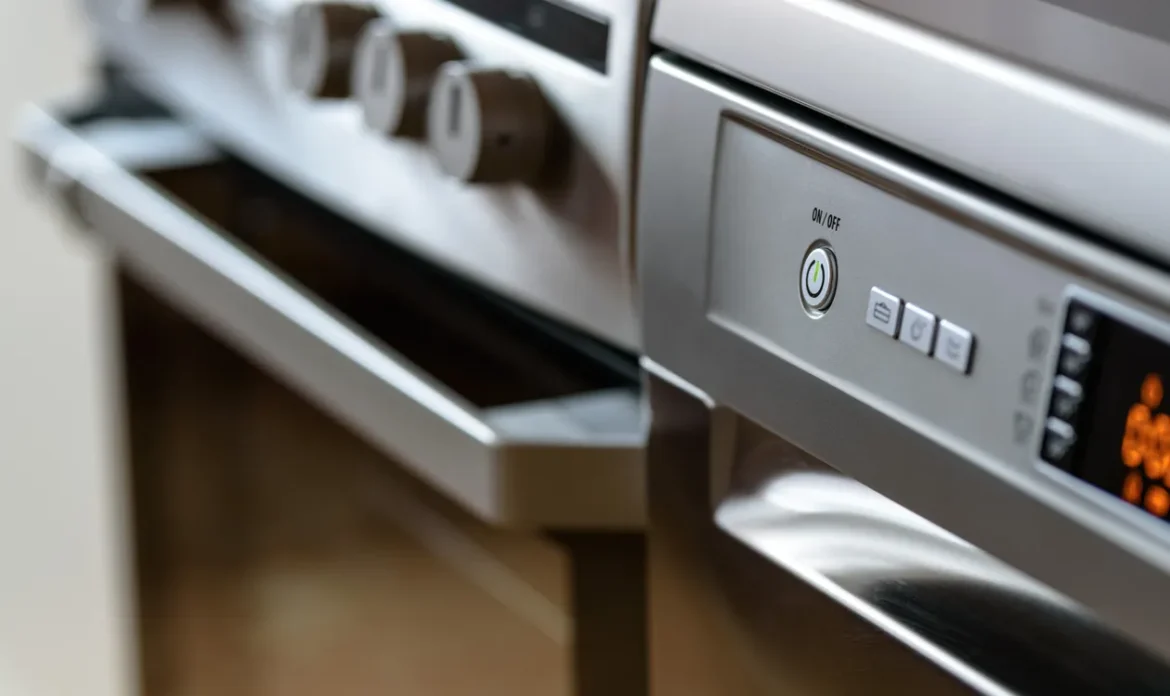
A dishwasher cleans everything except itself, and over time it collects grease, limescale, and food debris that leave dishes cloudy or the machine smelling musty. This guide covers how to clean a dishwasher naturally, without harsh chemicals, and how often to do it.
How Do You Clean a Dishwasher?
To clean a dishwasher, remove and wash the filter and racks, run an empty hot cycle with a bowl of white vinegar on the top rack, then follow with a short cycle using a cup of baking soda sprinkled across the base. This combination breaks down grease, limescale, and odour-causing residue without needing commercial cleaning products.
Signs Your Dishwasher Needs Cleaning
- Cloudy or spotty dishes: often caused by limescale or detergent residue building up inside the machine.
- A musty or sour smell: usually trapped food debris in the filter or door seal.
- Slow draining or pooling water: a common sign of a clogged filter or drain.
- Visible grime around the door seal: mould or mildew can build up here if not wiped regularly.
How to Clean a Dishwasher: Step by Step
1. Empty and Inspect
Remove all dishes and check the interior for visible food debris, removing anything loose by hand before you start.
2. Remove and Clean the Filter
Most dishwashers have a removable filter at the base. Take it out, soak it in hot soapy water for around ten minutes, then scrub with an old toothbrush to clear trapped food particles before rinsing and reinstalling.
3. Clean the Spray Arms
Remove the spray arms if possible and rinse them under hot water, using a toothpick or paperclip to clear any blocked holes, which can affect how well the dishwasher cleans.
4. Run a Hot Vinegar Cycle
Place a dishwasher-safe bowl containing one cup of white vinegar on the top rack of the empty machine and run a full hot cycle. The vinegar dissolves limescale, grease, and soap scum built up on the interior surfaces.
5. Follow With a Baking Soda Cycle
Sprinkle a cup of baking soda across the base of the dishwasher and run a short, hot cycle. This helps lift remaining stains and neutralises any lingering odours.
6. Wipe the Door Seal and Exterior
While the interior is still damp, wipe the rubber door seal with a vinegar-dampened cloth to remove trapped grime, then clean the exterior with warm soapy water, or a diluted vinegar solution for stainless steel.
7. Leave the Door Open to Air Dry
Leave the door propped open for around an hour once finished, since trapped moisture is one of the main causes of musty smells returning quickly.
Dealing With Hard Water Limescale
In hard water areas, a citric acid descaler can help clear stubborn white limescale marks that vinegar alone does not fully remove. Add roughly two tablespoons of food-grade citric acid to the base of the dishwasher and run a hot cycle, following the same principle as the vinegar wash.
If limescale is a recurring problem elsewhere in your kitchen or bathroom too, our guide to removing limescale from taps and showerheads covers the same issue on fixtures. If your tumble dryer also needs attention, our guide to cleaning a tumble dryer covers keeping another hardworking appliance safe and efficient.
How Often Should You Clean a Dishwasher?
A monthly deep clean, covering the filter, spray arms, and a vinegar and baking soda wash, keeps most dishwashers performing well. Wiping the door seal weekly and clearing visible debris after each use helps prevent buildup between deeper cleans.
Frequently Asked Questions
Can I use vinegar and baking soda together in a dishwasher?
They work best as two separate cycles rather than combined, since running them one after another gives each ingredient time to work fully rather than reacting against each other immediately.
Why does my dishwasher smell even after cleaning?
A lingering smell often points to a blocked filter or a build-up in the door seal that was not fully addressed. Removing and thoroughly cleaning both usually resolves persistent odours.
How do I remove limescale from my dishwasher?
A citric acid descaler run through a hot cycle is one of the most effective natural ways to clear limescale, particularly in hard water areas where vinegar alone may not fully dissolve deposits.
Is it safe to clean a dishwasher with vinegar every time?
Yes, vinegar is safe for regular use and will not damage the interior. Avoid using it alongside bleach-based products, since mixing different chemical cleaners can produce harmful fumes.
How often should I clean my dishwasher filter?
Checking and rinsing the filter every one to two weeks, with a more thorough clean monthly, helps prevent blockages and keeps the dishwasher working efficiently.
Always check your dishwasher’s manual for any manufacturer-specific cleaning guidance before using vinegar, citric acid, or other cleaning products.
About the Author
Spire Homes Editorial Team researches and writes practical, UK focused home improvement guides covering renovation planning, financing, interior design, and home appliances. Our content is reviewed for accuracy and updated as guidance changes.