A washing machine is one of the hardest-working appliances in any home, and getting the size, efficiency, and features right makes a real difference to both your laundry routine and your energy bill. This guide covers what actually matters when choosing one for a UK home.
How Do You Choose the Right Washing Machine?
Choose a washing machine based on drum capacity matched to your household size, an A energy rating for the lowest running costs, and dimensions that fit your available space, rather than focusing on the highest number of programmes. Most households use only three or four cycles regularly, so extra features are worth less than getting the core specification right.
Choosing the Right Drum Size
Drum size is measured in kilograms of dry laundry per wash. As a rough guide, a 6 to 7kg drum suits one to two people, an 8 to 9kg drum suits a family of three to four, and a 10kg or larger drum suits bigger households or anyone regularly washing bedding and towels. Buying slightly larger than your typical load, with some headroom, tends to work out better value than a machine that is constantly run at full capacity.
Understanding Energy Ratings
Since 2021, UK appliances use a simplified A to G energy label. An A-rated washing machine represents the most efficient option currently available and typically costs more to buy but less to run over its lifetime. Because a washing machine can run several times a week for a decade or more, the difference in running cost between an efficient and inefficient model adds up to real money over its working life, often outweighing a higher purchase price.
Spin Speed
Spin speed, measured in revolutions per minute, determines how much water is removed before drying. A higher spin speed, typically 1400 to 1600 rpm, leaves clothes drier and reduces tumble dryer time, while a lower speed, often used for delicates, is gentler on fabric. If you regularly tumble dry, a higher spin speed can meaningfully cut your drying costs.
Size and Space Considerations
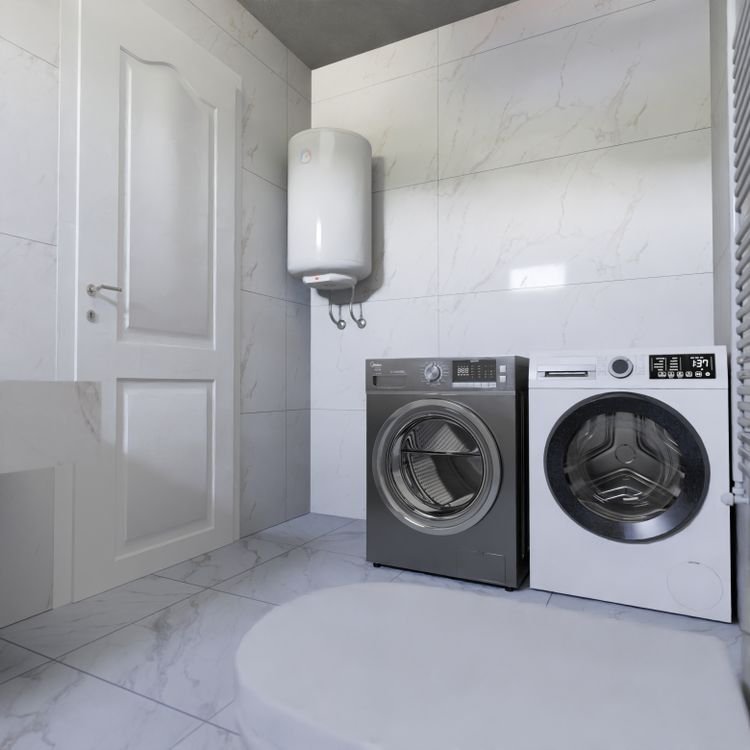
A standard freestanding washing machine is typically 60cm wide and 55 to 60cm deep. If you have a narrow kitchen, utility room, or flat, a slimline model with a reduced depth of around 40 to 45cm can fit spaces a standard machine cannot, usually with a smaller drum capacity as a trade-off. Always measure your available space, including door swing clearance, before ordering.
Noise Levels
If your washing machine sits near a bedroom, living area, or open-plan kitchen, noise level is worth checking, particularly for overnight or early morning washes. Machines with an inverter motor tend to run more quietly and with less vibration than older motor types.
Useful Features Worth Considering
- Quick wash cycles: useful for lightly soiled or time-sensitive loads, typically 15 to 30 minutes.
- Allergy or hygiene cycles: higher-temperature or steam cycles that can help remove allergens, useful for households with young children or allergy sufferers.
- Auto dosing: automatically measures detergent and softener per load, reducing waste and the risk of residue on skin-sensitive fabrics.
- Delay start: lets you time a wash to run during off-peak electricity hours if your tariff has time-of-use pricing.
Extra programmes beyond these core features add cost and complexity without necessarily improving results for most households, so it is worth prioritising the features you will genuinely use.
Total Cost of Ownership
A cheaper machine with a lower energy rating can end up costing more over five years once the difference in running costs is included, so it is worth comparing total cost of ownership rather than purchase price alone. A well-specified machine typically lasts seven to ten years with normal use, while a lower-quality budget model may need replacing after five to seven years.
Frequently Asked Questions
What size washing machine do I need for a family of four?
An 8 to 9kg drum is generally suitable for a family of three to four, giving enough capacity for regular loads without needing to run the machine excessively often.
Is it worth paying more for an A-rated washing machine?
Yes, in most cases. The higher purchase price is usually offset over the machine’s lifetime through lower electricity and water use, particularly for households doing frequent washes.
How long should a washing machine last?
A washing machine typically lasts five to ten years, with better-specified models generally lasting longer than entry-level ones under the same usage.
What is a slimline washing machine?
A slimline washing machine has a reduced depth, typically 40 to 45cm compared with the standard 55 to 60cm, making it suitable for narrow kitchens or utility spaces, usually with a smaller drum capacity as a trade-off.
Do I need a machine with lots of wash programmes?
Most households only regularly use three or four cycles, such as cottons, synthetics, and a quick wash, so a large number of specialised programmes is rarely essential and adds cost without proportional benefit for most people.
Where can I read about other kitchen appliances?
Our fridge freezer buying guide covers the same core principles of size, efficiency, and features for another essential kitchen appliance, and our guide to cleaning a dishwasher naturally covers keeping another hardworking appliance running well.
Prices, specifications, and energy ratings vary by brand and model. Always check the current energy label and manufacturer specifications before purchasing.
About the Author
Spire Homes Editorial Team researches and writes practical, UK focused home improvement guides covering renovation planning, financing, interior design, and home appliances. Our content is reviewed for accuracy and updated as products and standards change.