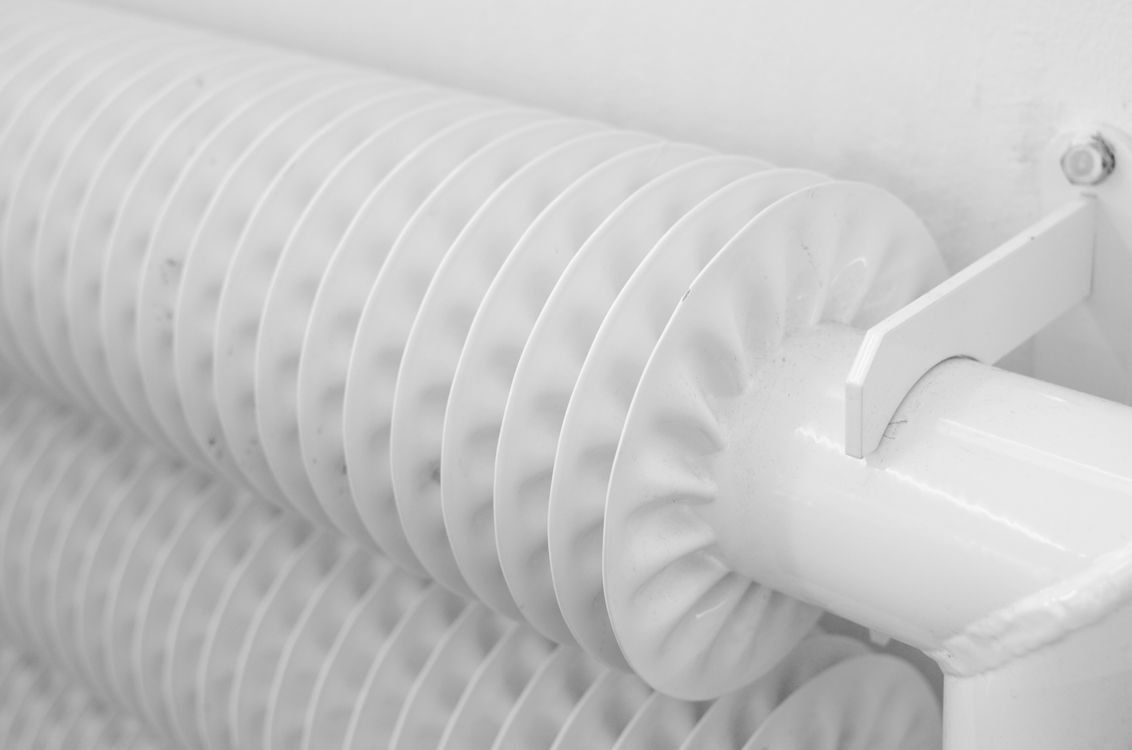
Cold spots on your radiator, gurgling pipes, or a room that never quite warms up usually point to trapped air in your heating system. Bleeding your radiators is a simple, five-minute job per radiator that most homeowners can do themselves, with no special tools beyond a radiator key.
How Do You Bleed a Radiator?
To bleed a radiator, turn off your heating, locate the bleed valve at the top corner, turn it anti-clockwise with a radiator key until you hear hissing air, then close it as soon as water starts to flow steadily. Always start with the radiator lowest in your house and work upward, since air rises and collects in higher radiators first.
Signs a Radiator Needs Bleeding
- Cold at the top, warm at the bottom: the clearest sign that air is trapped near the top of the radiator.
- Gurgling or bubbling noises: trapped air moving through the system as water tries to circulate around it.
- Slow to heat up: a radiator taking noticeably longer than others to warm through.
- Uneven heating across the room: a sign the radiator is not circulating water efficiently.
What You Will Need
- A radiator bleed key, available cheaply from any DIY store, or a flat-head screwdriver for some modern radiator valves
- An old towel or cloth
- A small bowl or container to catch drips
How to Bleed a Radiator: Step by Step
1. Turn On the Heating and Check Each Radiator
With the heating running, feel each radiator from bottom to top. A radiator that is cold or noticeably cooler at the top than the bottom needs bleeding.
2. Turn Off the Heating and Let Radiators Cool
Switch off your central heating and wait until the radiators are cool to the touch. Bleeding a hot radiator risks scalding, since the water and trapped air inside are pressurised and hot.
3. Find the Bleed Valve
The bleed valve is a small square-shaped fitting, usually found at the top corner of the radiator, on one end.
4. Protect the Area
Place a towel underneath the valve and hold a small bowl beneath it, since a small amount of water will escape once the air has cleared.
5. Open the Valve Slowly
Fit the radiator key, or a flat-head screwdriver if your valve takes one, and turn it slowly anti-clockwise, no more than one and a half turns. You should hear a hissing sound as trapped air escapes.
6. Close the Valve Once Water Appears
Once the hissing stops and a steady stream of water begins to flow instead, close the valve promptly by turning it clockwise. Wipe away any spills.
7. Repeat for Every Radiator, Starting Lowest
Work through every radiator in the house, starting with the one on the lowest floor and moving upward, since trapped air naturally rises and settles in higher radiators over time.
8. Check and Top Up Boiler Pressure
Bleeding radiators releases a small amount of water from the system, which can lower your boiler pressure. Check the pressure gauge on your boiler once you have finished; most systems should read between 1 and 1.5 bar when cold. If the pressure has dropped below this, use your boiler’s filling loop to top it back up, following your specific boiler’s manual, since the process varies slightly between models.
Houses Versus Flats: What Changes
In a standard house with its own boiler, always start with the radiator on the lowest floor and work up. In a flat or apartment block on a shared heating system, the opposite order often applies, since building managers commonly recommend bleeding from the highest floor downward. If you live in a shared building, check with your building manager or landlord before bleeding radiators yourself.
If bleeding does not resolve a persistently cold radiator, the issue may sit with your wider heating system. Our boiler replacement cost guide covers pricing if an ageing system needs a full upgrade.
Frequently Asked Questions
Which radiator should I bleed first?
In a standard house, start with the radiator on the lowest floor and work upward, since trapped air rises and tends to collect in radiators higher in the system.
How do I know if my boiler pressure needs topping up after bleeding?
Check your boiler’s pressure gauge once you have finished bleeding all radiators. Most systems should read between 1 and 1.5 bar when cold; if it is lower, use the filling loop to top it up according to your boiler’s manual.
Is it dangerous to bleed a radiator while the heating is on?
Yes. Always turn off the heating and let radiators cool before bleeding them, since the water and air inside are pressurised and hot enough to cause scalding if released while the system is running.
How often should radiators be bled?
Most homes benefit from bleeding radiators once a year, typically at the start of the heating season, though a radiator showing cold spots at any time should be bled as soon as it is noticed.
What if no water comes out after I bleed a radiator?
This can indicate low system pressure. Check your boiler pressure gauge and top it up using the filling loop if needed, then try bleeding the radiator again. If you need to remove the radiator completely, for decorating or a room change, our guide to removing a radiator covers the full process.
Always let radiators cool fully before bleeding them, and check your specific boiler’s manual for guidance on safely topping up system pressure.
About the Author
Spire Homes Editorial Team researches and writes practical, UK focused home improvement guides covering renovation planning, financing, interior design, and property maintenance. Our content is reviewed for accuracy and updated as guidance changes.