
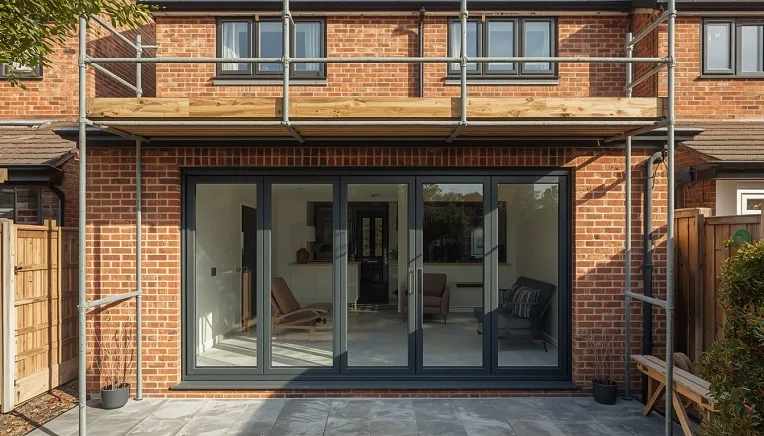
Adding an extension is one of the most effective ways to gain space without the cost and upheaval of moving house. Prices vary widely depending on size, type, and location, so this guide breaks the cost down clearly and shows where the money actually goes.
How Much Does a House Extension Cost in the UK?
A house extension in the UK typically costs between £1,500 and £3,300 per square metre, meaning a standard single-storey rear extension of around 20 square metres usually falls between £30,000 and £66,000. Location has a major impact, with London and the South East often running 25 to 40% above the national average.
Extension Cost by Type
| Extension type | Typical cost per m² | Notes |
|---|---|---|
| Single-storey rear | £1,800 to £3,000 | The most common extension type in the UK |
| Side return | £2,000 to £3,500 | Popular on Victorian terraces, often within permitted development |
| Double-storey | £1,900 to £2,800 | Cheaper per square metre than two single-storey builds, since foundations and roof costs are shared |
| Wraparound | £2,400 to £3,300 | Combines a rear and side extension for maximum space |
What Affects the Final Price
Size and Shape
Smaller extensions often cost more per square metre, since fixed costs such as scaffolding, foundations, and site setup do not scale down with a smaller footprint. Larger extensions tend to offer better overall value per square metre.
Location
An architect-designed extension in London can cost between £3,000 and £5,000 per square metre, compared with £2,000 to £3,500 per square metre across most of the rest of the UK, driven mainly by higher labour and material costs.
Single-Storey Versus Double-Storey
Building up is typically 10 to 15% cheaper per square metre than a single-storey extension, since foundation and roof costs are spread across two floors. The total project cost is still higher overall, simply because there is more floor area.
Finish Level
Standard fittings, mid-range kitchens, and simple glazing sit at the lower end of the cost range. Bifold doors, underfloor heating, and bespoke joinery all add cost, so it is worth deciding early which finishes genuinely matter to you.
Do You Need Planning Permission?
Many single-storey rear extensions fall under permitted development rights and do not need a full planning application, provided they stay within set limits, typically up to 3 metres for attached houses or 4 metres for detached houses without prior approval. Larger extensions, up to 6 or 8 metres depending on house type, may still be possible under the prior approval process, which involves notifying your local authority and giving neighbours 21 days to comment. Always confirm your specific plans with your local planning office before starting work, since rules vary by property and conservation status. Our full planning permission guide covers more project types in detail.
How to Fund an Extension
Given the scale of most extension budgets, few homeowners pay the full cost outright. Our home improvement financing guide covers the main borrowing routes, including secured loans and remortgaging, both of which suit larger projects like an extension better than a smaller unsecured loan in most cases. If you are also dealing with an ageing roof, our roof repair cost guide covers what common fixes cost. If a full extension is more than you need, our conservatory cost guide covers a lighter-weight alternative. Once any new brickwork or render is finished, our guide to the best exterior wall paint for UK homes covers finishing it properly.
Where to Save Without Cutting Corners
- Keep the footprint efficient: a well-planned smaller extension often delivers better value than an oversized one.
- Choose a simple roof design: complex rooflines add cost quickly compared with a straightforward pitched or flat roof.
- Phase the finish: completing the structural shell first and upgrading interior finishes later can spread cost over time.
- Get at least three quotes: prices from builders for the same specification can vary significantly, so comparing quotes properly is worth the time.
Frequently Asked Questions
How much does a 20 square metre extension cost?
A 20 square metre single-storey extension typically costs between £36,000 and £66,000 at UK average rates, depending on specification and location.
Is a double-storey extension worth the extra cost?
In most cases, yes. A double-storey extension costs more overall but is usually cheaper per square metre than building the equivalent space as two separate single-storey extensions.
Do I need planning permission for a house extension?
Many single-storey rear extensions fall under permitted development and do not require full planning permission, though larger extensions or those on listed or conservation-area properties usually do. Always check with your local planning office before starting.
How much value does an extension add to a house?
Research from Nationwide Building Society suggests adding a large double bedroom and bathroom through an extension can add as much as 24% to the value of a three-bedroom home, though this varies by property and location.
How long does a house extension take to build?
A single-storey extension typically takes between three and six months from the start of construction, depending on size, complexity, and weather delays.
Costs in this article are general UK estimates and vary significantly by region, property, and specification. Always obtain multiple quotes from qualified builders before committing to a budget.
About the Author
Spire Homes Editorial Team researches and writes practical, UK focused home improvement guides covering renovation planning, financing, interior design, and property maintenance. Our content is reviewed for accuracy and updated as prices and standards change.