
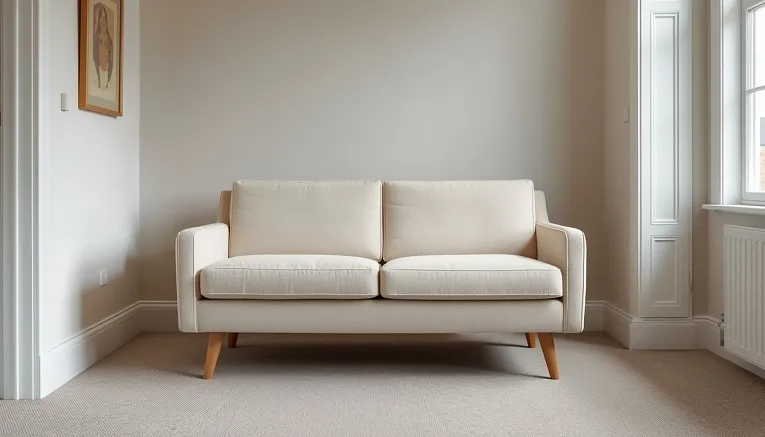
The sofa is usually the largest single piece of furniture in a living room, so getting it right matters more than any other purchase in the space. Choose well and it anchors the room. Choose poorly and even a beautifully decorated small living room can feel cramped. This guide covers exactly what to measure and look for.
How Do You Choose a Sofa for a Small Living Room?
For a small living room, choose a sofa under 190 centimetres wide, with slim legs and low, narrow arms, and leave at least 75 to 90 centimetres of walkway clearance around it. Measuring your space properly before you shop prevents the single most common mistake: buying a sofa that is simply too large for the room.
Step 1: Measure Before You Shop
Measure the width of the wall where the sofa will sit and the overall depth of the room to understand how much space you genuinely have. Mark the sofa’s footprint on the floor with painter’s tape and walk around it to check that doorways, walkways, and other furniture still have room to breathe. It is also worth measuring your front door, hallway, and any staircases, since a sofa that fits the room can still fail to make it through a narrow entrance.
Step 2: Get the Size Right
For most small living rooms, a sofa between 168 and 198 centimetres wide works well. As a rule of thumb, leave 75 to 90 centimetres of clearance for walkways and 35 to 45 centimetres between the sofa and a coffee table. For two adults, a two-seater with a seating width of around 120 to 150 centimetres is usually enough. If children or guests regularly join, a seating width of 150 to 180 centimetres gives more flexibility without tipping into a bulky three-seater.
Step 3: Choose a Space-Conscious Design
- Slim, low arms: a sofa with slender arms takes up noticeably less visual and physical space than one with wide, boxy arms.
- Visible legs: sofas raised on slim legs let light pass beneath them, which keeps the floor looking open rather than heavy.
- Straight rather than curved lines: a clean, straight silhouette tends to read as more compact than a rounded or overstuffed shape, even at the same footprint.
- Modular or corner options: a compact modular sofa or a small corner sectional can make efficient use of an awkward layout better than a single long sofa.
Step 4: Consider Multi-Functional Options
A sofa bed, a model with built-in storage, or a modular design that can be reconfigured as your needs change all add practical value in a small space. These options let one piece of furniture do the work of two, which matters more the smaller the room is.
Step 5: Think About Colour and Fabric
Light, neutral colours tend to make a small room feel more open, since they reflect more light than dark tones. That said, a dark sofa, such as navy or charcoal, can still work well in a small room if balanced with lighter cushions, a pale rug, and good lighting, since dark furniture against a light backdrop can create a sense of depth rather than closing the room in.
Step 6: Position It Well
Position the sofa to face the room’s natural focal point, whether that is a fireplace, a window, or a television, rather than pushing it flush against every available wall. Leaving a small gap between the sofa and the wall, rather than crowding it right up against the skirting, often makes a room feel more considered and less boxed in.
For more layout and colour guidance beyond the sofa itself, our guide to making a small living room look bigger covers lighting, mirrors, and furniture placement in more depth. If storage is also tight, our small bedroom storage ideas covers similar space-saving thinking for another room. If existing furniture has developed a wobble, our guide to fixing a wobbly chair or table covers the quick fix. Once your sofa is in place, our guide to cleaning upholstery covers keeping it looking new.
Frequently Asked Questions
What size sofa is best for a small living room?
A sofa between 168 and 198 centimetres wide generally works well for a small living room, with at least 75 to 90 centimetres of walkway clearance left around it.
Should I choose a light or dark sofa for a small room?
Light, neutral colours tend to make a small room feel more open, though a dark sofa can still work well if balanced with lighter cushions, a pale rug, and good lighting.
Is a corner sofa a good choice for a small living room?
A compact corner sofa can work well in a small room, since it makes use of a corner that might otherwise go unused and can open up more central floor space than a long straight sofa.
How much clearance should I leave around a sofa?
Leave at least 75 to 90 centimetres for walkways around the sofa and 35 to 45 centimetres between the sofa and a coffee table, to keep the room feeling open rather than cramped.
Should I measure doorways before buying a sofa?
Yes. A sofa that fits the room can still fail to arrive there if it does not fit through the front door, hallway, or staircase, so measuring access points is an important step before ordering.
Sofa dimensions and clearances are general guidance. Always check the specific measurements of a sofa and your room before purchasing.
About the Author
Spire Homes Editorial Team researches and writes practical, UK focused home improvement guides covering renovation planning, financing, interior design, and furniture choices. Our content is reviewed for accuracy and updated as trends change.