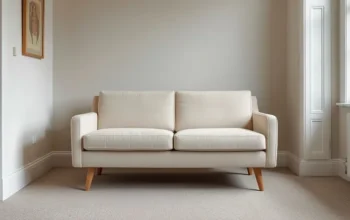

A sofa sees more daily use than almost any other piece of furniture, and regular cleaning keeps it looking fresh far longer than an occasional deep clean alone. This guide covers how to clean upholstery properly, based on fabric type.
How Do You Clean Upholstery?
To clean upholstery, check the manufacturer’s cleaning code on the label, vacuum thoroughly to remove dust and debris, spot-treat stains with an appropriate cleaner for the fabric type, and always test on a hidden area first. The correct method depends heavily on whether your sofa is water-safe, solvent-only, or a delicate fabric that needs professional care.
Understanding Cleaning Codes
- W: water-based cleaning products are safe to use.
- S: solvent-based cleaners only, since water can cause shrinking, staining, or watermarks on this fabric type.
- WS: either water or solvent-based cleaners can be used.
- X: vacuum only, no liquid cleaning products, since the fabric cannot tolerate moisture or solvents.
Always check the label under seat cushions or on the frame before choosing a cleaning method, since using the wrong type of product on the wrong fabric can cause permanent damage.
How to Clean Upholstery: Step by Step
1. Vacuum Thoroughly
Use an upholstery attachment to vacuum the entire sofa, including seams, crevices, and beneath removable cushions, where crumbs and dust commonly collect.
2. Check the Cleaning Code
Confirm whether your fabric is rated W, S, WS, or X before proceeding, since this determines which cleaning products are safe to use.
3. Spot-Test First
Apply a small amount of your chosen cleaning solution to a hidden area, such as the back or underside of a cushion, and check after a few minutes for any discolouration or damage before treating a visible area.
4. Treat Stains
For W or WS rated fabric, use a mild detergent solution or dedicated upholstery cleaner, blotting rather than rubbing. For S rated fabric, use a solvent-based cleaner specifically designed for upholstery, following the product’s instructions closely.
5. Deodorise if Needed
For W or WS fabrics, a light sprinkle of baking soda left for 15 to 20 minutes before vacuuming can help absorb odours. Avoid this on S or X rated fabrics, since even dry powder can be difficult to fully remove from delicate weaves.
6. Dry Thoroughly
Allow any dampened area to dry fully before use, ideally with good airflow in the room, since damp upholstery left closed up can develop a musty smell or mould.
When to Call a Professional
Delicate fabrics rated X, antique or valuable furniture, and large or deeply set stains are often best left to a professional upholstery cleaner, since the wrong home treatment risks permanent damage that a specialist could otherwise avoid.
If you are furnishing a room and considering new pieces, our guide to choosing a sofa for a small living room covers practical buying principles worth knowing before you invest in new furniture.
Frequently Asked Questions
What does the W cleaning code mean on a sofa label?
A W code means the fabric can be safely cleaned with water-based cleaning products, unlike S rated fabrics, which require solvent-based cleaners instead.
Can I use a steam cleaner on my sofa?
Only on W or WS rated fabrics, and even then it is worth checking the manufacturer’s specific guidance first, since excessive heat and moisture can affect certain cushion fillings or fabric backings.
How often should upholstery be deep cleaned?
A full deep clean every six to twelve months, alongside regular vacuuming, keeps most sofas looking fresh, though households with pets or young children may benefit from more frequent attention.
What should I do if I do not know my sofa’s cleaning code?
Check the manufacturer’s care label, usually found under cushions or on the frame. If it is genuinely unclear, a professional upholstery cleaner can advise on safe treatment for your specific fabric.
Is baking soda safe on all upholstery?
Baking soda is generally safe on W and WS rated fabrics, but should be avoided on S or X rated fabrics, since dry powder can be difficult to fully remove from more delicate or solvent-only weaves.
Always check the manufacturer’s specific cleaning code and test any product on a hidden area before treating visible upholstery.
About the Author
Spire Homes Editorial Team researches and writes practical, UK focused home improvement guides covering renovation planning, financing, interior design, and furniture care. Our content is reviewed for accuracy and updated as guidance changes.