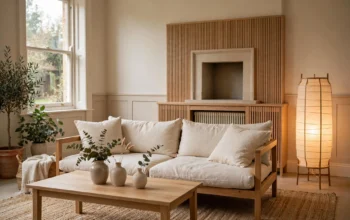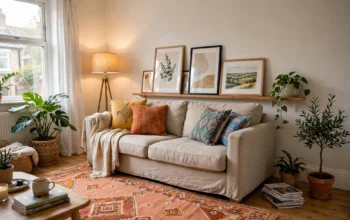
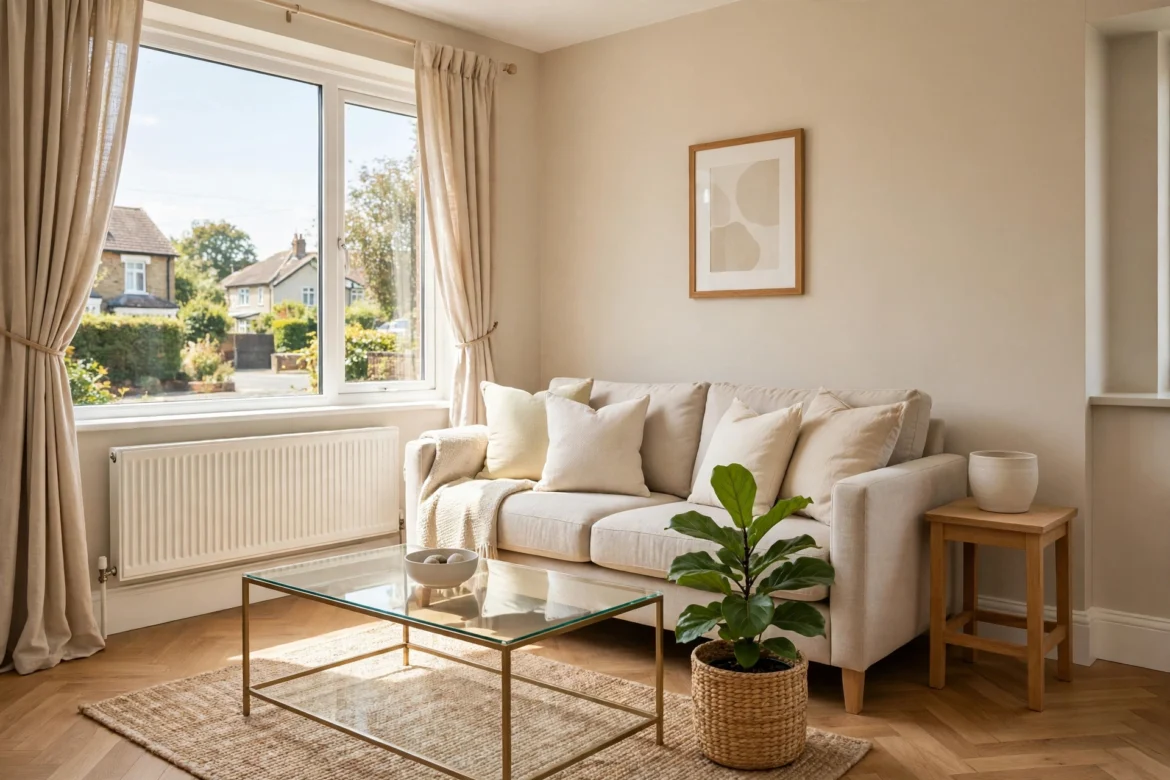
Staging a house to sell sounds simple until you ask what it will cost. The answer is not one number, because staging is not one service. It can mean a weekend of decluttering in a home you still live in, a stager spending a day rearranging the furniture you already own, or a completely empty house filled with hired furniture for a month of photographs and viewings. Each version costs a different amount, and each suits a different kind of sale.
This guide separates those versions, explains what drives the cost in each case, and shows what a professional quote should include before you accept it. It follows on from our room-by-room guide to how to stage a house to sell in the UK, which covers the method itself. Here the focus is money: where it goes, where it is wasted, and when paying a professional is likely to be worth it.
Why There Is No Single Staging Price
A national staging price would be misleading, because five things change the quote before a stager has even seen the house. The first is whether the home is occupied or empty. An occupied home already has furniture, so the work is mostly editing, rearranging and finishing. An empty home needs furniture brought in, delivered, installed and later removed, which is a different job entirely.
The second is the number of rooms staged. Some sellers stage only the rooms that carry the listing, usually the living room, the main bedroom and the kitchen. Others stage the whole house. A quote for three rooms and a quote for eight rooms should never be compared as if they were the same service.
The third is location and access. Delivery, parking and the time needed to move furniture in and out all affect the cost, and they vary by area and by property type. A ground-floor flat with lift access is a simpler delivery than a top-floor flat with no lift, or a house with narrow stairs.
The fourth is the hire period. Hired furniture is charged for a set period, often linked to the expected marketing period, with extra charges if the house stays on the market longer. A quote that looks low for the first month can become expensive if the sale takes three months, so the hire period matters as much as the headline figure.
The fifth is what is included. A consultation, a hands-on styling day, furniture hire, photography preparation, and removal at the end of the sale are separate items. Some quotes include all of them. Others include only the first. Comparing quotes without checking this list is the most common way sellers overpay, or under-budget, for staging.
What DIY Staging Costs
Do-it-yourself staging is the lowest-cost route, and for most occupied homes it is also the right route. The main cost is time. Decluttering, packing personal items, cleaning, rearranging furniture and dressing beds takes days spread over one or two weeks, not a single afternoon. That time is real, even though no invoice arrives for it, and it should be counted when you compare DIY staging with hiring help.
The cash spending, when there is any, falls into a small set of predictable items. Paint for the highest-impact walls, usually the hallway, the living room and any room with scuffed or strongly coloured walls. Storage boxes for what you pack away, and possibly a short storage hire if the house is genuinely full and furniture needs to leave the property to make rooms read clearly. A small number of finishing items: plain or lightly textured bedding, white towels, a few cushions and throws in a simple colour story, and one or two healthy plants. Cleaning supplies, or a professional deep clean for the kitchen and bathroom if time is short.
What DIY staging should not include is buying furniture for a house you are leaving. A new sofa, a new dining table or a new bed bought for staging is rarely recovered in the sale price, and it creates a removal problem at moving time. If a room is missing a key piece, for example a bed in a bedroom that buyers need to see as a bedroom, hiring that single piece for the photography period is usually cheaper and more sensible than buying it. The same applies to a rug or a mirror that defines a room: hire or borrow for the listing, rather than buying for a house you will not live in.
A useful DIY budget rule is to spend in order of visibility. The rooms and details that appear in the first listing photographs come first, because most buyers judge the house from those photographs before they book a viewing. The hallway, the living room and the main bedroom repay finishing spending far sooner than a spare room that appears late in the photograph set, or a garden detail that buyers will only see on a viewing.
How Professional Stagers Charge
Professional stagers usually price by the work involved rather than by a fixed tariff. For an occupied home, the common pattern is a consultation followed by a hands-on styling day. The consultation sets the plan: which furniture stays, which goes into storage, what needs repairing or repainting, and which finishing items are needed. The styling day puts that plan into practice: furniture is moved, rooms are dressed, beds are made, surfaces are cleared to a deliberate few objects, and the house is left ready for photographs.
For an empty home, the pattern is different. The stager selects furniture, arranges delivery and installation, styles each room for photographs, and later removes everything when the property is sold or the hire period ends. Because furniture, transport and labour are all involved, an empty-home project costs considerably more than an occupied-home styling day, and the hire period becomes a major part of the total. Always ask how long the initial hire runs, what happens if the property is still on the market after that period, and whether removal is included in the quoted figure or charged separately.
Some stagers also offer a consultation-only service. This suits sellers who are happy to do the physical work themselves but want a professional eye on the plan: which rooms to prioritise, which furniture to remove, and what the photographs should show. A consultation-only fee is the lowest professional cost, and it is often the best value for an occupied home in reasonable condition, because it buys judgement without paying for labour the seller can do.
Charging models vary, so do not assume one stager’s model matches another’s. Some charge a fixed fee per project, some charge per room, and some charge a day rate for styling plus separate furniture hire. The model matters less than the written list of what is covered. A fixed project fee that includes furniture hire, styling and removal is a different offer from a fixed fee that covers styling alone, even if the two figures look similar at first glance.
Vacant Versus Occupied: The Cost Difference That Matters Most
The vacant versus occupied distinction is the single largest cost driver in staging, and it is worth understanding before you request any quote.
In an occupied home, the furniture, the lighting and the basic layout already exist. The stager’s job is to edit and improve what is there. Costs stay comparatively low because there is no furniture hire, no large delivery, and no removal at the end beyond returning stored items. The seller’s own time is the main input, with a styling day as the main professional cost if one is used.
In a vacant home, every room that appears in the photographs needs furnishing from scratch. That means selecting furniture in a neutral, broadly appealing style, delivering it, installing it, styling it, and removing it later. The hire period then runs for as long as the property is marketed, which can be weeks or months. A vacant property also photographs badly without staging, because empty rooms look smaller and colder than furnished ones, and buyers struggle to judge whether a double bed, a dining table or a sofa will fit. That is why vacant staging, despite its higher cost, is the case where professional staging is most often justified: the alternative is not a slightly weaker listing, but a listing where buyers cannot read the rooms at all.
Part-staging sits between the two. A seller might hire furniture for one or two key rooms, such as the living room and the main bedroom, and leave secondary rooms empty or lightly dressed. This can work when the key rooms carry the listing and the other rooms are clearly proportioned, but it needs care: a beautifully staged living room next to a completely empty bedroom can make the empty room look like an afterthought. If part-staging is proposed, ask the stager which rooms will be photographed first and make sure those rooms are the ones that are staged.
What a Good Quote Should Include
Before accepting any staging quote, ask for it in writing, item by item. A clear quote should state the rooms covered, the service type (consultation only, styling day, or full furniture hire and styling), the furniture and accessories included, the hire period and what happens after it, the delivery and removal arrangements, and any exclusions. Exclusions to watch for include painting, repairs, deep cleaning, storage hire for the seller’s own furniture, and photography itself, which is usually arranged by the estate agent rather than the stager.
Also ask about the condition of hired furniture. Hired pieces should look new or nearly new in photographs, with no visible wear, stains or damage. A stager who shows photographs of recent work on similar UK property types, rather than showroom images, is giving you a fairer picture of what your house will look like. Ask how long before photography the furniture will be installed, so there is time for a final check in daylight and in the evening, and ask who is responsible if a hired piece is damaged during the marketing period.
Payment terms should be clear too. Some stagers ask for payment in full before installation, some split payment between installation and removal, and some charge the hire element monthly. None of these is wrong in itself, but the terms should be written down, with the hire period, the renewal charge and the removal charge stated separately rather than bundled into a single vague total.
For comparison, our guide to how much an interior designer costs in the UK explains a related set of charging models, hourly, per room and project fees, and what a design fee usually does and does not include. Staging and interior design are different services, staging presents a house for sale, design changes a home for living in, but the same discipline applies to both: compare written lists of inclusions, not headline figures alone.
Is Staging Worth It by Property Type?
Staging is not equally valuable for every property, and the honest answer depends on the sale, not on staging in general.
For a typical occupied family home in reasonable condition, DIY staging plus, if wanted, a consultation is usually enough. The furniture is already there, the rooms already have a purpose, and the work is editing rather than creating. Spending on presentation here is usually the smaller figure compared with a price reduction, because a tired-looking listing invites low offers in a way that a clear, well-photographed listing does not.
For a small flat, staging costs less in absolute terms because there are fewer rooms, and the benefit can be proportionally larger. Small spaces benefit most from clear purpose: a one-bedroom flat where the bedroom clearly fits a double bed and the living room clearly shows a dining corner reads better than the same flat photographed as storage. Our guide to small living room layout ideas gives the clearance and furniture-scale checks that make a small staged room read correctly in photographs, rather than looking arranged for the camera alone.
For an empty property, a finished renovation with no furniture, or a probate sale, professional staging is most often worth considering. The house has no furniture to edit, so DIY staging cannot solve the main problem, which is that buyers cannot judge scale and purpose from empty photographs. In this case the staging cost should be weighed against the time the property might otherwise spend on the market, and against the risk of early low offers from buyers who cannot picture the rooms furnished.
For a property with an unusual layout, such as a through-lounge, an open-plan space or a room with an awkward shape, a professional eye can also be worth paying for, even in an occupied home. The value is not in the furniture, which the seller already owns, but in the layout judgement: showing buyers how the room works, rather than leaving them to work it out from a photograph.
For a property that needs major work, staging is not the right spend. A leaking roof, a dated bathroom suite that buyers will replace, or a structural issue will not be solved by cushions and a rug, and staging over problems damages trust when buyers find them at the viewing. In that case, spend first on honest repairs and a realistic asking price, and stage only the rooms that are already in saleable condition.
Mistakes That Waste Staging Money
Several staging spends look sensible and waste money in practice. Buying furniture for a house you are leaving is the first, as noted above. The second is staging every room to the same standard when only the photographed rooms drive viewings: a spare room dressed to showroom standard while the living room photographs are dark and cluttered is money spent in the wrong order.
The third is paying for furniture hire without checking the hire period. A short initial hire that renews monthly can quietly become the largest part of the total if the sale takes longer than expected. The fourth is staging before repairs are done. Fresh cushions in a room with a dripping tap, a cracked tile or a sticking door draw attention to the contrast, rather than hiding it, and buyers read the room as neglected despite the styling.
The fifth is over-staging. A room crowded with accessories, a different scent in every room, or a style so specific that buyers remember the styling rather than the space, all work against the sale. Staging should make the room easier to read, not more interesting to look at. One clear purpose per room, a few deliberate objects, and consistent light and colour across the house do more than a long list of finishing items.
How to Compare Quotes and Decide
When you have two or three quotes, compare them on the same basis. Write down, for each quote, the rooms covered, the service type, the hire period, the inclusions and exclusions, and the total for the expected marketing period, not just the first month. Then compare that total with the alternative: the cost of DIY staging plus your own time, and the cost of a price reduction if the house photographs poorly.
Ask each stager the same questions: What exactly is included, and what is not? How long does the hire run, and what is the renewal charge? When will furniture be installed relative to photography? What happens at removal, and who pays for it? Can you show recent work on a similar property type? A stager who answers clearly, in writing, is usually a safer choice than one whose quote is lower but vaguer, because the vague quote is where extra charges appear later.
Finally, agree the timing with your estate agent before you commit. Staging should be finished before the photographs, not after them, because the photographs are the main benefit. If the agent’s photographer is booked for a particular day, work backwards from that day: installation and styling before it, a daylight and evening check before it, and a fifteen-minute reset routine for viewings after it. A staging project that finishes after the photographs have been taken has missed its main purpose, however well the house looks in person.
Frequently Asked Questions
How much does it cost to stage a house in the UK?
There is no single national rate, because the cost depends on whether the home is occupied or empty, how many rooms are staged, the hire period for any furniture, and what the quote includes. DIY staging in an occupied home costs mainly time plus paint, storage and a small number of finishing items. Professional staging for an occupied home is usually a consultation and a styling day. An empty home costs considerably more, because furniture hire, delivery and removal are involved.
Is DIY staging cheaper than hiring a stager?
Yes, in cash terms, because the main input is the seller’s time. DIY staging suits most occupied homes in reasonable condition. Hiring a stager becomes worth considering when the property is empty, the layout is unusual, time is genuinely short, or the seller wants the photography set handled to a professional standard.
What does a professional staging quote usually include?
It should state the rooms covered, whether it is consultation only, a styling day, or full furniture hire and styling, the hire period and renewal charge, delivery and removal, and any exclusions such as painting, repairs or storage. Ask for this list in writing before accepting, and compare quotes on the same list rather than on headline figures alone.
How long is furniture hired for?
Hired furniture is usually charged for an initial period linked to the expected marketing period, with extra charges if the property remains on the market after that period. Always ask how long the initial hire runs, what the renewal charge is, and whether removal is included, before you agree a total.
Should I stage a small flat?
Usually yes, and it costs less than staging a house because there are fewer rooms. Small spaces benefit most from clear purpose, so a flat where each room has one obvious use photographs better than the same flat shown as storage, even if the staging itself is simple.
When is staging not worth paying for?
When the property needs major repair work, when the asking price is the real problem, or when the house is already well presented and only needs a tidy and a clean before photographs. In those cases, spend on repairs, pricing advice or a simple DIY tidy first, and consider professional staging only if the listing still reads poorly after that work.