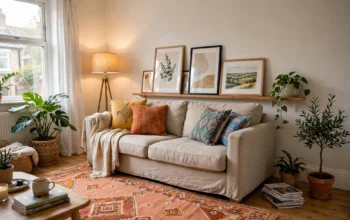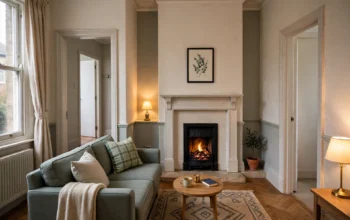
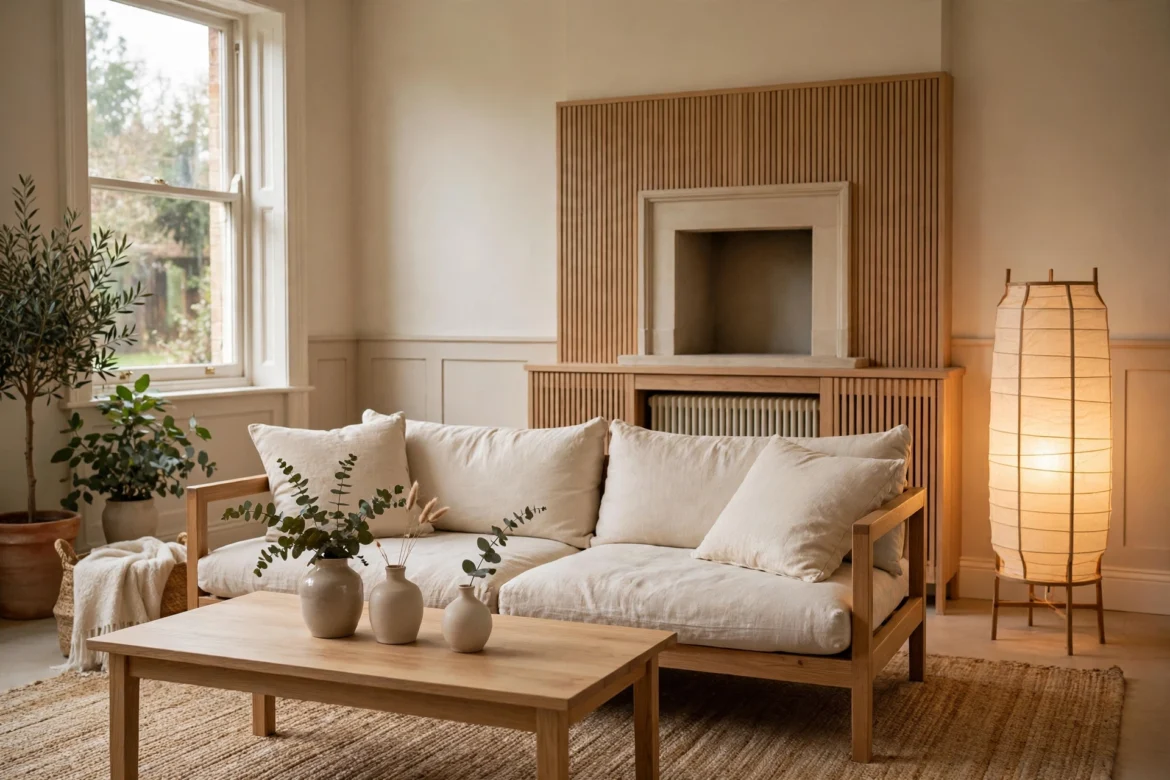
Japandi looks effortless in photographs. A low sofa, pale wood, a single vase on a clear table, and a room that seems to breathe. Then you try it in a British living room and the problems arrive at once: a radiator under the window, a fireplace that dominates the wall, low winter light, a small through-lounge, and a sofa that has to survive children, pets and everyday use rather than a photo shoot.
Japandi is worth the effort, because it suits UK homes better than most imported styles. It is calm without being cold, and it is built from natural materials and restrained colour, which flatter period features instead of fighting them. The trick is to adapt it, not to copy it. This guide explains what Japandi actually is, how to choose a palette for low UK light, which furniture and materials work in a British home, how to handle radiators, fireplaces and small rooms, and how to build the look on a sensible budget.
What Japandi Actually Is, and Is Not
Japandi is a blend of Japanese minimalism and Scandinavian warmth. From Japan it takes restraint, low furniture, natural materials, and the idea that empty space is part of the design rather than a gap to fill. From Scandinavia it takes warmth, soft textiles, pale wood, and a room that is meant to be lived in rather than admired from the doorway. The result is a room that feels calm and warm at the same time.
It is not bare minimalism. A Japandi living room still has books, lamps, cushions and plants, but each piece has a reason to be there, and surfaces are kept clear enough that the room does not feel busy. It is not a theme, either. Paper lanterns, bamboo and a low table do not make a room Japandi if the colour is cold, the furniture is high and bulky, and every surface is covered. The style is a set of principles, low lines, natural materials, a restrained palette, and space to move, applied consistently.
It is also not a rule that everything must be new. In a UK home, Japandi works best when it keeps what the house already gives you: a fireplace, wooden floorboards, a bay window, or a solid wooden sideboard. Those pieces carry the natural, crafted feeling that the style depends on, and they cost nothing to buy. The new pieces should match them in tone and simplicity, not compete with them.
The Palette for Low UK Light
Colour is where a UK Japandi room most often goes wrong. Photographs from brighter climates use cool whites and pale greys that look serene in strong sunlight. In a British living room, especially a north-facing one, those same colours can look cold, flat and slightly blue, and the room can feel gloomy rather than calm.
Start with warmth. Choose warm whites, soft greige, warm taupe and pale oat tones for the walls, rather than brilliant or blue-based whites. These colours keep their warmth under the cool, indirect light that most UK living rooms receive for much of the year. Add one or two deeper natural tones for contrast: a muted sage, a warm clay, a soft charcoal, or a deep warm brown, used in cushions, a throw, artwork or one piece of furniture rather than across all four walls. That contrast stops the pale palette from looking washed out, and it gives the eye somewhere to rest.
Keep the palette narrow. Three or four colours, repeated across the room in different materials, will look more Japandi than ten colours each appearing once. A warm white wall, light oak wood, cream linen, and one accent, such as sage or clay, is enough. When you are choosing paint, test large swatches in your own room, morning and evening, with the lamps on. Our guide to north-facing living room colours explains the undertone rule that decides most of these choices, and it applies to east and west-facing rooms too, wherever the light is limited.
Flooring follows the same rule. Warm wooden floors, or a warm-toned rug over a cooler floor, support the palette far better than pale grey flooring. A natural jute, wool or cotton rug in a warm neutral anchors the seating area and adds the texture that a pale room needs. Texture matters as much as colour here: linen, wool, rattan, unfinished wood and rough ceramic all read as warm, even in a pale scheme, because they catch light and shadow in a way that flat, glossy surfaces do not.
Low Furniture and Clear Surfaces
Low furniture is the most recognisable feature of Japandi, and it changes how a room feels more than any single colour choice. A low sofa with a wooden frame, a low coffee table, and low storage all keep the eye line open, so the room feels taller and calmer, even when the ceiling is not high. In a small UK living room, that effect is valuable, because high, bulky furniture can make the room feel crowded from the doorway.
Choose a sofa with a visible wooden frame or slim legs, in a natural fabric such as linen or a linen-look weave, in cream, oat, warm grey or muted sage. Avoid a high-backed, deep-buttoned sofa in a dark fabric, which will dominate the room and fight the low, light feeling. If you already own a taller sofa, you can still move towards Japandi with the pieces around it: a low coffee table, a low sideboard, and lamps at seating height rather than tall, imposing units.
Clear surfaces are the second half of this principle. A Japandi coffee table holds one or two objects, a vase with a single stem, a small stack of books, or a ceramic bowl, not a collection. That does not mean the room must be empty. It means storage must be closed and deliberate. Books, games, chargers and remote controls belong inside a sideboard, a basket, or a storage ottoman, not spread across every surface. A room with clear surfaces looks larger, photographs better, and is easier to keep calm on an ordinary weekday, which is the real test of the style.
Scale matters too. In a through-lounge or a small square room, a compact two-seater, 150cm to 180cm wide, usually works better than a large corner sofa, because it leaves walkways clear and keeps the low, open feeling. Our guide to small living room layout ideas gives the clearance numbers to check before you buy, including the 60cm minimum walkway and the viewing distance from sofa to television.
Natural Materials That Survive British Homes
Japandi depends on natural materials, but a British home tests them harder than a showroom does. Central heating dries the air in winter, windows let in damp air, and everyday life brings mud, tea and pets. Choose materials that age gracefully rather than ones that need constant protection.
Light oak, ash and beech work well for tables, frames and shelving, because they are pale, warm and hard-wearing. Walnut is a good deeper alternative for one piece, such as a sideboard, where contrast is wanted. Avoid very pale, untreated wood for surfaces that will hold cups every day, unless you are happy for it to mark and darken over time. A matt lacquer or a hardwax oil finish keeps the natural look while giving some protection.
For textiles, linen and cotton are the main choices, with wool for throws and rugs. Linen wrinkles, and that is part of its character, but a linen-look fabric with a small synthetic content is easier to live with on a sofa that is used daily. Wool rugs handle foot traffic better than jute in a main walkway, while jute works well under a coffee table where it is seen more than walked on. Rattan and cane suit baskets, lamp shades and chair backs, and they add warmth without weight.
Ceramics, stone and handmade-looking pottery suit the style better than glossy plastic or chrome. A few well-chosen pieces, a large vase, a stone bowl, a handmade mug on a shelf, carry more character than a shelf of matching ornaments. Plants complete the material palette: an olive tree, a eucalyptus stem in a vase, or a trailing plant on a shelf adds living texture. Choose plants that tolerate low UK light and dry heated air, and keep them to a small number of larger plants rather than many small pots, which can make the room feel cluttered again.
Working Around Radiators, Fireplaces and Small Rooms
No UK living room is a blank canvas, and Japandi has to work with the features that are already there. The three most common problems have practical answers.
Radiators are the first. A radiator under a window breaks the low, clean line that Japandi aims for, but it does not have to ruin the room. The simplest approach is to treat it honestly: paint it the same warm white as the wall or the woodwork, so it recedes rather than standing out, and keep furniture clear of it so heat can circulate. A slatted wooden radiator cover can soften its appearance and give a useful shelf, provided it leaves gaps for airflow and can be removed for bleeding and maintenance. Never box a radiator in completely, and never place a long curtain directly over it, both waste heat and create a fire risk. If the radiator is on the main feature wall, centre the seating on the fireplace or the window instead, and let the radiator sit quietly at the edge of the arrangement.
Fireplaces are the second, and they are an advantage. A fireplace, even an unused one, gives a Japandi room a natural focal point and a place for the low furniture to face. Keep the mantelpiece almost clear: one vase, one piece of art leaning against the wall, or a pair of candlesticks, rather than a row of objects. If the fireplace is not used, a small stack of logs, a large candle arrangement in a safe holder, or a simple ceramic piece inside the opening looks intentional without pretending the fire is lit. If the fireplace surround is dark marble or ornate Victorian tile, do not try to hide it. Japandi respects crafted materials, and a period fireplace in a pale room is a strong, honest contrast.
Small rooms are the third, and Japandi suits them, provided the layout is settled first. The style needs clear floor and clear walkways, so measure the room, decide the sofa and television positions, and keep the main route through the room free before choosing accessories. A mirror opposite a window, curtains hung high and wide so they do not block light, and one large rug rather than several small ones all help a small Japandi room feel open. Avoid a separate unit for every function: one low sideboard that holds the television equipment, books and games is more Japandi than three small tables doing the same job badly. For the full measured approach, the layout guide linked above works through the three room shapes that UK terraces actually have.
Bay windows deserve a note of their own. A bay is a gift for Japandi, because it brings light and a low seating opportunity. A low bench or a pair of floor cushions in the bay, with a plant and a lamp, creates a reading corner without adding a large piece of furniture. Keep the bay window treatment simple: a pale linen curtain or a plain roller blind that lets light in during the day, rather than heavy, patterned curtains that darken the room the style is trying to brighten.
A Japandi Room on a Budget
Japandi does not require a whole room of new furniture, and buying everything at once is the fastest way to make the room look like a catalogue rather than a home. Work in spending order, starting with the changes that cost least and change the room most.
First band: paint, textiles and lighting. A warm white or greige repaint, linen-look cushion covers, a natural rug, and warm white bulbs in existing lamps transform the feeling of a room for the lowest outlay. This is also the stage to declutter: remove pieces that do not fit the palette or the low lines, and store them rather than throwing them away, so you can judge the room with clear surfaces before spending more.
Second band: one key piece. Usually this is the coffee table or the sofa, because those two pieces set the height and material tone for the whole room. A light oak coffee table, or a low wooden-framed sofa in a natural fabric, changes the room more than several small accessories. Buy the best quality you can afford at this stage, because these are the pieces that are touched and sat on every day.
Third band: storage and finishing pieces. A low sideboard with closed doors, a slatted radiator cover, a paper floor lamp, and a small number of ceramic pieces complete the look. These are worth buying slowly, one piece at a time, so each one earns its place. Second-hand wooden furniture, repainted or refinished in a warm tone, fits this stage well, and it suits the crafted, natural feeling of the style better than flat-pack copies.
What not to spend on: matching sets. A sofa, armchair, coffee table and sideboard all in the same wood and fabric look uniform rather than Japandi, which depends on a mix of natural materials that share a tone but not an identical finish. A room built slowly, with oak, linen, wool, ceramic and rattan each appearing once or twice, will look more authentic than a room bought in a single order.
If the project grows beyond a refresh, for example if you are redesigning the room layout, choosing fitted storage, or commissioning bespoke joinery, professional help may be worth the cost. Our guide to how much an interior designer costs in the UK explains the charging models and what a design fee usually does and does not include, so you can judge whether a consultation or a per-room package fits your budget.
What to Avoid
A few common mistakes undo an otherwise good Japandi room. Avoid cold, blue-based whites and greys, which turn a calm room into a cold one in UK light. Avoid glossy, dark or heavily patterned furniture, which fights the matt, natural palette. Avoid too many small ornaments, even if each one is beautiful on its own: in a Japandi room, five objects on a shelf are clutter, and one is a statement.
Avoid hiding the house. Covering a fireplace with a flat panel, boxing in every radiator, or painting over good wooden floors to achieve a uniform pale look removes the character that Japandi is meant to celebrate. Work with period features, and let them be the most crafted pieces in the room.
Avoid the showroom trap. A Japandi room that is never sat in, never has a book left on the table, and never has a throw folded over the sofa arm is not a success. It is a photograph. The style should make everyday life calmer, not harder, so keep the pieces you actually use, store the rest, and let the room show a little life. A single throw, a book, and a plant are enough life for the room to feel lived in without feeling busy.
Frequently Asked Questions
Does Japandi work in a small UK living room?
Yes, and it often works better than busier styles, because low furniture, clear surfaces and a narrow palette make a small room feel larger. The layout must come first: keep walkways clear, choose a compact sofa, and use one large rug rather than several small ones.
What colours should I avoid in a UK Japandi room?
Avoid brilliant white, icy blue and blue-grey, which can look cold in UK light. Choose warm whites, greige, warm taupe and pale oat, with muted sage, clay or warm brown as accents, and test large swatches in your own room before committing.
Can I keep my existing sofa?
Yes, if it is a comfortable size and a reasonably neutral colour. Move towards Japandi with the pieces around it: a low coffee table, a natural rug, warm lighting, and clear surfaces. Replace the sofa only when it dominates the room in height, bulk or colour.
How do I handle a radiator in a Japandi room?
Paint it to match the wall or woodwork, keep furniture clear so heat circulates, and consider a slatted wooden cover with airflow gaps if you want to soften its appearance. Never box it in completely, and never hang a long curtain directly over it.
Is Japandi the same as Scandinavian design?
No, although they share pale wood and warmth. Scandinavian design is generally brighter and more focused on light and comfort, while Japandi adds Japanese restraint, lower furniture, more empty space, and a stronger emphasis on natural, crafted materials. The blend is calmer and more disciplined than Scandinavian design alone.
How much does a Japandi living room cost?
It depends on how much you already own. A refresh based on paint, textiles, lighting and decluttering is the lowest-cost route. One key piece, such as a low sofa or an oak coffee table, is the next step, and storage and finishing pieces can be added slowly. Buying slowly, and reusing good wooden furniture you already have, keeps the cost down and makes the room look more authentic.