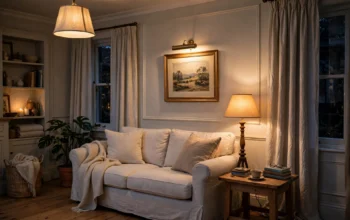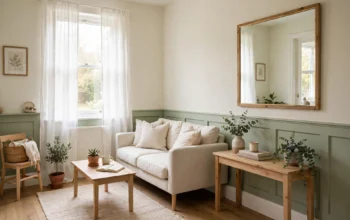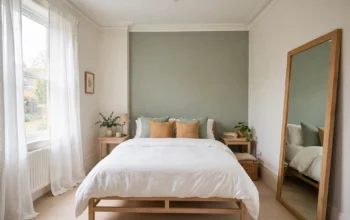
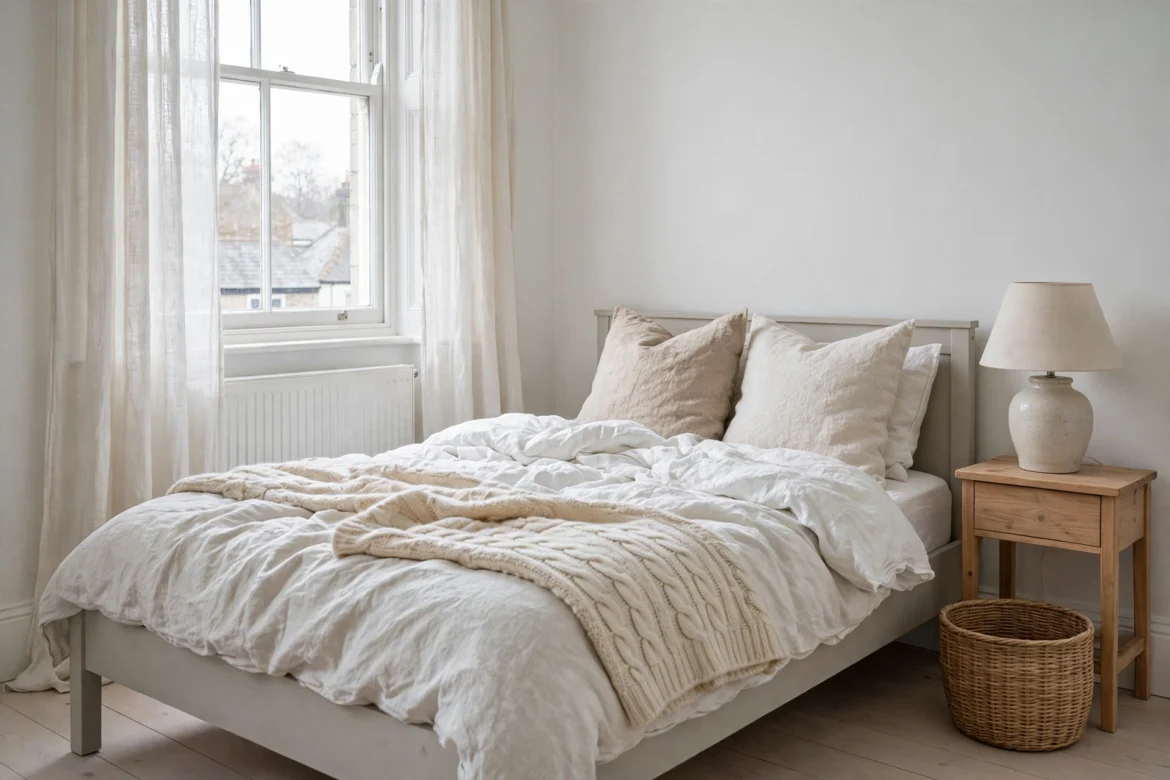
Scandinavian bedrooms look effortless in photographs. Pale wood, white walls, rumpled linen, a woollen throw, and light pouring through a tall window. Then you try the look in a real British bedroom and the problems start. The room is a box bedroom barely big enough for a double bed. The window faces north and the light is grey for four months of the year. There is a radiator under the window, a chimney breast on one wall, and a ceiling that is 2.4 metres high. The pale, airy look from the photograph suddenly feels cold and bare, and the room looks unfinished rather than calm.
The style itself is not the problem. Scandinavian design was made for exactly these conditions: long dark winters, small rooms, and homes that need to feel warm without being cluttered. The mistake is copying the photograph instead of adapting the principles to the room. This guide does that adaptation. It covers how to lay out a Scandi bedroom in a UK box bedroom, which furniture actually fits, how to handle low winter light, what to do about radiators and period features, and what the look costs in pounds at three different budgets.
What Scandinavian Style Actually Is, and What It Is Not
Scandinavian design is often reduced to "white walls and pale wood", which is why so many attempts end up looking like an empty room with a bed in it. The style has three real principles, and the colour palette is only the surface of them.
The first principle is light. Homes in Denmark, Sweden and Norway get very little daylight in winter, so the whole style is built around catching and keeping whatever light there is. Pale walls, pale floors, sheer curtains and mirrors are not decoration. They are light management. That is exactly what a north-facing UK bedroom needs, which is why the style works here when it is done properly.
The second principle is warmth through texture, not through colour. A Scandi room is not cold because it is pale. It is warm because it layers wool, linen, cotton, wood and sheepskin until the room feels soft to touch. A bare white room with a metal bed frame is not Scandinavian. It is just bare. The textiles do the warming work that a dark paint colour would do in another style.
The third principle is that everything in the room earns its place. Scandinavian homes are small, so furniture is chosen for use, not for display. A bedside table holds a lamp, a book and a glass of water. It does not hold three decorative objects. That discipline is what keeps a small bedroom feeling calm instead of cluttered, and it is also what makes the style affordable: you buy fewer, better things.
What the style is not: it is not a showroom. A real Scandi bedroom has a laundry basket, a phone charger and a book on the bedside table. It is not minimalist in the stark sense. And it is not the same as Japandi, the blend of Japanese and Scandinavian design, which is darker, lower and more spare. Our guide to japandi living room ideas explains that blend and where it differs from the pure Scandi look covered here.
Start With the Room You Have: Measuring a UK Box Bedroom
Before buying anything, measure the room and draw it on paper. A typical UK box bedroom is around 2.4 by 2.7 metres, sometimes smaller in a 1930s semi or a new-build flat. A standard UK double bed is 135 cm wide and 190 cm long. Once the bed is in, you have very little room left, so the layout has to be decided before the shopping starts.
Put the bed against the longest clear wall, with the headboard on the wall and the foot pointing into the room. In a box bedroom that usually means the bed fills most of one wall and leaves a strip of floor down one side. That is fine. You need about 60 cm of clear floor on the side you get out of bed, and enough space at the foot to walk past without turning sideways. If you cannot get 60 cm on either side, the bed is too big for the room and a small double at 120 cm wide will serve you better than a standard double that blocks the door.
Do not put the bed under the window if you can avoid it. It looks good in photographs, but in a British home the radiator is usually under the window, and a bed pushed against a radiator loses heat into the bedding, blocks the warmth from the room, and makes the window hard to open. It also means cold draughts from the window fall straight onto the sleeper. If the bed has to go under the window because there is no other wall, leave at least 15 cm between the headboard and the radiator and use a low headboard that does not cover the window sill.
Measure the door swing too. In a small bedroom the door often opens into the room and its arc decides where furniture cannot go. A chest of drawers behind the door is wasted space. Note the positions of plug sockets as well, because a bedside lamp needs a socket within reach, and running a cable across the floor in a small dark room is a trip hazard.
Finally, measure the ceiling height and the window. Standard UK ceilings are about 2.4 metres, which rules out tall wardrobes and high headboards that would suit a taller room. A low bed frame and a low headboard keep the room feeling taller than it is, which matters when the room is small.
The Bed: Where It Goes and What It Should Look Like
The bed is the room, in a small bedroom. It takes up most of the floor and most of the eye, so getting it right matters more than anything else you buy.
Choose a low frame in pale wood, ash or light oak, with short legs that show a little floor underneath. Visible floor under the bed makes the room look bigger, and pale wood keeps the biggest object in the room from dominating it. Avoid dark wood, black metal and upholstered headboards in dark fabric. All three make the bed look heavier and the room smaller. A simple wooden headboard, or no headboard at all with the bed against a painted wall, suits the style better than a tall padded one.
A divan base with storage drawers is practical, but only if the drawers can actually open. In a box bedroom with 60 cm of floor beside the bed, a drawer that needs 50 cm to open will hit the wall or the bedside table. Check the clearance before you buy. An ottoman lift-up base is often the better choice in a small room, because it opens upwards and uses no floor space at all. Under-bed storage boxes on wheels are the cheapest option and work well, provided they are shallow enough to slide under a low frame.
Keep the bedding simple. White or natural linen-look cotton in a plain weave, one pillow per sleeper plus one extra, and a single throw folded across the foot of the bed. That is the whole formula. Patterned duvet sets, matching valances and piles of cushions fight the calm the style is trying to create. If you want pattern, put it in one place only, such as a single cushion or a folded throw with a subtle stripe, and keep everything else plain.
Pale Wood, White Walls and the Colour That Warms Them
The Scandi palette is pale, but it is not one flat white. The rooms that work best use three or four pale tones together: a warm white on the walls, pale wood on the floor and furniture, natural linen in cream and oatmeal, and one soft accent colour repeated in small doses.
Wall colour matters more in a north-facing bedroom than in any other room, because the light is cool and grey. A brilliant white with a blue undertone will look cold and almost grey in winter light. Choose a warm white with a yellow or pink undertone instead, and test it on the wall in the evening under the lamp you will actually use, not just in daylight. Our guide to bedroom colour schemes for small bedrooms covers this in detail, including which colours suit north-facing rooms and which ones make a small bedroom feel smaller.
Pale wood is the second colour in the room. Ash, birch, light oak and pale pine all work. Keep the wood tones consistent: if the bed is pale ash, the bedside table should be pale ash or pale oak, not dark walnut. Mixed wood tones are one of the quickest ways to make a calm room look busy. If you already own a darker piece you want to keep, paint it in a warm white or pale grey rather than trying to match it to pale wood. Painted furniture is entirely in keeping with Scandinavian style.
The accent colour should be soft and used sparingly. Sage green, dusty blue, warm terracotta and muted ochre all sit comfortably in a Scandi bedroom. Pick one, and repeat it three times in the room: a cushion, a throw and a small object such as a vase or a book cover. Three repeats make it look deliberate. One repeat looks accidental, and five or more makes it a theme rather than an accent.
Avoid grey as the main colour. Grey walls, grey bedding and grey carpet together are the most common reason a Scandi bedroom ends up looking cold. Grey works as a single accent, for example in one cushion, but a room built on grey needs strong warm light and a lot of texture to avoid feeling like a hospital room. Warm white and natural wood do the job better in a British winter.
Textiles: The Layer That Makes Scandi Work in a Cold House
If the room feels cold and bare after painting and furnishing, the answer is almost always textiles, not more furniture. This is the layer people skip because it looks like decoration, but in a British home with single glazing, draughty windows and a radiator that runs for four months a year, textiles are functional.
Start with the bed. A linen-look duvet cover in white or natural, a flat sheet turned down at the top, and a chunky knit or woven throw across the foot of the bed will change the feel of the room more than any other single purchase. Wool is the right material for the throw, because it is warm, breathable and holds its shape. A thin decorative throw in shiny fabric adds nothing and slides off the bed.
Add a rug beside the bed. In a box bedroom the rug does not need to be large. A runner or a small rug about 80 by 150 cm beside the bed, where your feet land in the morning, is enough. Choose wool or cotton in a plain weave, in cream, oatmeal or a soft muted pattern. A rug also does practical work: it stops the floor feeling cold, it deadens sound in a small room, and it stops the pale wood floor from looking bare.
Curtains should be linen or linen-look, in white or natural, hung on a simple pole or track that runs past the window frame on both sides. The fabric should filter light, not block it. Heavy blackout curtains in a dark colour will kill the pale, bright look entirely. If you need blackout for sleeping, use a discreet blackout blind behind the sheer curtain, so the room looks light during the day and dark at night.
Finally, add one soft texture at sitting height. A sheepskin or a woollen cushion on the bed, or a soft throw over the back of a chair, gives the room something warm to touch. One or two textured pieces are enough. The aim is a room that feels warm when you walk in barefoot, not a room full of cushions you have to move every night.
Storage That Fits a Box Bedroom
A small bedroom needs storage, but bulky wardrobes are the enemy of the Scandi look. A tall dark wardrobe in a box bedroom will dominate the room and block the light, so the storage has to be planned as carefully as the bed.
Use the space under the bed first. An ottoman base, under-bed boxes or vacuum bags for out-of-season clothes will hold more than you expect, and they cost nothing in floor space. Next, use the wall beside the bed rather than the wall opposite it. A narrow chest of drawers, no deeper than 45 cm, against the longest free wall will hold folded clothes without blocking the walkway.
Wall-mounted storage works better than floor-standing storage in a small room. A single floating shelf above the bedside table, or a row of hooks on the back of the door for dressing gowns and tomorrow’s clothes, keeps the floor clear and the room feeling open. A small open shelf with three or four books and one object looks deliberate. A shelf crammed with things looks cluttered, which is the opposite of what the style wants.
If you need a wardrobe and there is no built-in one, choose the narrowest wardrobe that holds your clothes, in pale wood or painted warm white, and put it on the darkest wall of the room, usually the wall opposite the window. That keeps it out of the light and stops it casting a shadow across the bed. Sliding doors are better than hinged doors in a small room, because they need no floor space to open.
For the full detail on what fits where, including measurements for chests, wardrobes and under-bed storage in small UK bedrooms, see our guide to small bedroom storage ideas.
Winter Light: Making a North-Facing Bedroom Feel Bright
A north-facing bedroom in Britain gets no direct sun at all in winter. From November to February the light is flat, cool and grey, and it fades by mid-afternoon. The Scandi approach to this is not to fight the light but to make the most of it, and to replace it properly when it goes.
Keep the window completely clear. No furniture in front of it, no heavy curtains, no clutter on the sill. The glass should be clean, the curtains should be sheer, and the window should be the brightest surface in the room. A mirror on the wall opposite the window, or on the wall beside it, will bounce the available light back into the room. It does not need to be large. A mirror about 60 cm across, hung at eye level, will do more than a wall of small mirrors.
Layer the artificial light the way you would in a living room. One ceiling light on its own gives flat, shadowy light that makes a pale room look grey. Add a bedside lamp with a warm white bulb, 2700K, on each side of the bed if there is room, or one lamp and a small wall light on the other side. A warm bulb matters more here than anywhere else in the house: cool white bulbs in a pale room look clinical, while warm white bulbs make the same pale walls look soft. Our guide to layered lighting design for a living room explains the three layers, ambient, task and accent, and the same principles apply in a bedroom at a smaller scale.
Use the ceiling light less, not more. In the evening, a bedside lamp and a low light in the corner of the room will make the bedroom feel calm and warm, while the ceiling light on full brightness will flatten everything and show every mark on the wall. A dimmer on the ceiling light is worth fitting if you own the home, and a plug-in lamp with a dimmer switch is the renter-friendly alternative.
One more practical point: check your bulbs. A bedroom lit by a single old bulb in a bare fitting will never look Scandinavian, whatever you spend on furniture. Two warm lamps at bedside height will do more for the room than a new bed frame.
Radiators, Period Features and the Things You Cannot Move
British bedrooms come with features Scandinavian homes do not have, and the style has to work around them rather than pretend they are not there.
The radiator is the most common problem. It is usually under the window, it is usually white, and it is usually in the way. Do not hide it behind a solid radiator cover. A solid cover blocks heat, and in a small bedroom you need all the heat you get. If the radiator looks ugly, paint it the same warm white as the wall, which makes it disappear visually, and keep furniture at least 15 cm away from it. A bedside table pushed against a radiator will dry out the wood and block the warmth. If you want a cover, use a slatted one with gaps that let the heat through, and keep the top clear.
Period features are an advantage, not a problem. Original skirting boards, a picture rail, a ceiling rose or a fireplace in a Victorian or Edwardian bedroom already give the room the character that Scandinavian furniture alone cannot provide. Paint them the same warm white as the walls and let them be the detail. Do not paint a fireplace black or box it in. A simple white-painted fireplace with a pale wood mantel shelf and one or two objects on it fits the style perfectly.
Chimney breasts create an awkward alcove on either side, which is a gift in a small bedroom. A narrow chest of drawers fits into an alcove, or a single floating shelf and a small reading lamp turn it into a bedside nook. Do not fill an alcove with a tall wardrobe. The alcove is shallow, the wardrobe will stick out, and the room will feel smaller.
If you rent, none of this needs permission. Paint is the only item that might need the landlord’s agreement, and many landlords will agree to a warm white repaint because it improves the property. Everything else in this guide, furniture, textiles, lighting and storage, is freestanding and moves with you.
Budgets: Three Ways to Get the Look
The Scandi look does not need a big budget, because it is built on fewer things rather than more expensive things. The costs below are realistic bands for a small UK bedroom, based on typical high-street and second-hand prices, and they assume you already own a bed and a mattress.
A refresh budget, around 150 to 400 pounds, covers paint, bedding and textiles. Warm white paint for the walls, a linen-look duvet set, a wool throw, a small rug and a pair of sheer curtains will transform a bedroom that already has a reasonable bed and a bedside table. This is the best value spend, because the textiles and the paint do most of the visual work.
A mid-range budget, around 600 to 1,200 pounds, adds furniture. A pale wood bed frame, two matching bedside tables and a narrow chest of drawers, bought from a high-street retailer or second-hand and painted, will give the room a coherent look. Buy the bed frame first, because it is the biggest object in the room. Bedside tables can be mismatched if they are the same height and colour, so you do not need a matching set.
A fuller refit, around 1,500 to 3,000 pounds, adds a new mattress, a wardrobe in pale wood or painted white, proper bedside lighting and a quality wool rug. At this level, spend the money on the things you touch every day: the mattress, the bedding and the rug. A cheap rug and cheap bedding will undo a good bed frame, while good bedding will make a modest bed frame feel expensive.
Second-hand is the smartest way to buy Scandi furniture in the UK. Pale wood furniture is common on local selling sites and in charity shops, because the style has been popular for years. A solid pine chest of drawers painted warm white is indistinguishable from a new one once it is in the room, and it will cost a tenth of the price. Check the drawers run smoothly and the joints are solid, and ignore surface marks, because paint covers them.
Mistakes That Make a Scandi Bedroom Look Cold or Unfinished
The most common mistake is too much white and not enough texture. White walls, white bedding, white curtains and a white rug, with no wood and no wool, look like a hospital room, not a home. If the room feels cold, add wood and wool before you add colour. A wooden bedside table and a woollen throw will warm the room faster than a coloured wall.
The second mistake is buying furniture that is too big. A king-size bed in a box bedroom, a deep wardrobe that blocks the door, or a bedside table that is wider than the gap beside the bed will all make the room feel cramped, however pale the colours are. Measure first, buy second, and be honest about what fits.
The third mistake is overhead lighting only. A single ceiling light makes a pale room look flat and grey in the evening, and it is the reason many Scandi bedrooms look good in daylight photographs and unwelcoming at night. Add at least one lamp at bedside height before you buy anything else.
The fourth mistake is clutter on open surfaces. Scandinavian style needs clear surfaces to work. A bedside table with a lamp, a book and a glass of water looks calm. The same table with a lamp, three books, a phone charger, a jewellery box, a water bottle and a pile of post looks cluttered, whatever colour the walls are. Give everything a place, and keep the surfaces clear.
The fifth mistake is copying a photograph exactly. The rooms in photographs are styled for a camera, with no laundry, no chargers and no books. Your bedroom has to hold your life. A basket for laundry, a hook for tomorrow’s clothes and a drawer for chargers are part of the style, not a failure of it. The aim is a room that is calm because it is organised, not a room that is empty because nothing is allowed in it.
Frequently Asked Questions
Does a Scandinavian bedroom work in a north-facing room?
Yes, and it is one of the best styles for a north-facing room, because it was designed for low, cool light. Use a warm white with a yellow undertone on the walls, keep the window clear, add a mirror opposite the window, and use warm white bulbs at bedside height in the evening. Avoid brilliant white paint and cool white bulbs, which will make the room look grey.
What is the difference between Scandinavian and Japandi bedrooms?
Scandinavian bedrooms are pale, bright and textured, with white walls, pale wood and wool. Japandi bedrooms are darker, lower and more spare, with more contrast and fewer objects. The two styles share an interest in natural materials and calm rooms, but Japandi is not simply a darker version of Scandi. Our guide to japandi living room ideas explains the distinction in full.
How do I make a small Scandi bedroom feel warm, not cold?
Add texture, not colour. A woollen throw, a linen duvet cover, a wool rug beside the bed and a wooden bedside table will warm the room more than a coloured wall. Warm white bulbs at bedside height in the evening matter as much as the textiles. If the room still feels cold, check the wall colour: a brilliant white with a blue undertone is the usual cause.
Can I do a Scandinavian bedroom in a rented home?
Yes. Everything except painting is freestanding: the bed, the bedding, the textiles, the lamps and the storage all move with you. If you want to paint, ask the landlord first, because many will agree to a warm white repaint. If painting is not allowed, the textiles and the lighting alone will get you most of the way there.
How much does a Scandinavian bedroom cost in the UK?
A refresh of paint, bedding and textiles costs around 150 to 400 pounds. Adding furniture takes the total to around 600 to 1,200 pounds. A fuller refit with a new mattress, wardrobe and quality rug costs around 1,500 to 3,000 pounds. Buying pale wood furniture second-hand and painting it is the cheapest way to get the look.