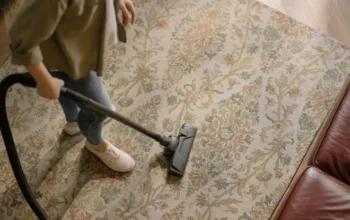
Pet hair works its way deep into carpet fibres and upholstery in a way that a standard vacuum pass often misses entirely. This guide covers the methods that actually lift embedded hair, not just the loose surface layer.
How Do You Remove Pet Hair From Carpet and Furniture?
To remove pet hair, use a rubber-bristled brush or squeegee dragged across the surface to gather embedded hair into clumps, then vacuum up the loosened hair, following up with a slightly damp rubber glove for any remaining fine hairs. Standard vacuuming alone often fails to lift hair that has worked into the base of carpet fibres or fabric weave.
What You Will Need
- A rubber-bristled brush, squeegee, or rubber broom
- A vacuum cleaner, ideally with a pet hair attachment
- Rubber gloves
- A lint roller, for smaller areas or clothing
- A slightly damp cloth, for hard furniture surfaces
How to Remove Pet Hair From Carpet
1. Vacuum First
Start with a normal vacuum pass to remove loose surface hair and debris, which makes the following steps more effective on the embedded hair that remains.
2. Use a Rubber Squeegee
Drag a rubber squeegee or broom across the carpet in one direction, then again from the opposite direction. The rubber’s static and texture pull embedded hair up to the surface, gathering it into clumps.
3. Vacuum Again
Vacuum up the loosened clumps of hair, which should now lift far more easily than before the squeegee pass.
4. Try a Damp Rubber Glove for Fine Hairs
Put on a rubber glove, dampen it slightly, and run your hand across the carpet. Fine, stubborn hairs cling to the damp rubber and can be gathered by hand for any remaining traces.
How to Remove Pet Hair From Furniture and Upholstery
1. Use a Lint Roller for Quick Spots
A lint roller works well for smaller areas, such as a cushion or throw, and is the fastest option for a quick touch-up before guests arrive.
2. Use a Rubber Glove or Balloon for Larger Pieces
For sofas and larger upholstered furniture, a damp rubber glove or an inflated balloon rubbed across the fabric creates static that lifts embedded hair effectively, similar to the carpet method.
3. Vacuum With an Upholstery Attachment
Finish with a vacuum’s upholstery attachment to remove the loosened hair fully, working into seams and crevices where hair commonly collects.
Preventing Pet Hair Buildup
- Brush your pet regularly: reducing shedding at the source cuts down significantly on hair reaching furniture and carpets.
- Use washable throws on furniture: a removable throw on a sofa or favourite chair contains hair and is far easier to clean than the upholstery itself.
- Vacuum more frequently in high-traffic pet areas: a quick, more frequent vacuum prevents hair building into a harder, deeply embedded layer.
If pet hair is part of a wider carpet care routine, our guide to removing a carpet stain covers treating spills and marks alongside regular hair removal.
Frequently Asked Questions
What removes pet hair from carpet better than a normal vacuum?
A rubber-bristled brush, squeegee, or broom dragged across the carpet lifts embedded hair to the surface far more effectively than vacuuming alone, since standard vacuum brushes often miss hair worked deep into the fibres.
Does a damp rubber glove really work on pet hair?
Yes. The combination of static and slight dampness on rubber causes fine hairs to cling to the glove, making it effective for gathering the last traces that other methods miss.
How often should I vacuum if I have pets?
Vacuuming pet-heavy areas two to three times a week, with a full-home vacuum weekly, generally keeps hair from building into a stubborn, deeply embedded layer.
Can a balloon really remove pet hair from a sofa?
Yes. An inflated balloon rubbed across fabric generates static that attracts and lifts pet hair, working on a similar principle to a rubber glove.
Why does pet hair keep coming back even after cleaning?
Ongoing shedding means new hair continually reaches carpets and furniture, so regular brushing of your pet and more frequent light cleaning, rather than occasional deep cleans alone, keeps buildup manageable.
Results can vary depending on carpet pile type and fabric material, so test any new method on a small, hidden area first if you are unsure.
About the Author
Spire Homes Editorial Team researches and writes practical, UK focused home improvement guides covering renovation planning, financing, interior design, and property maintenance. Our content is reviewed for accuracy and updated as guidance changes.