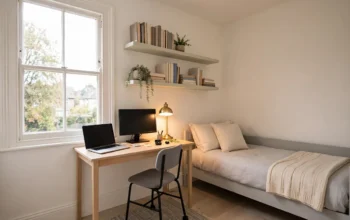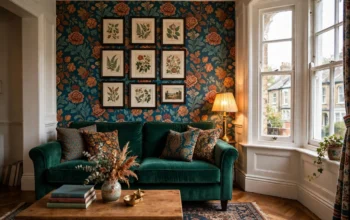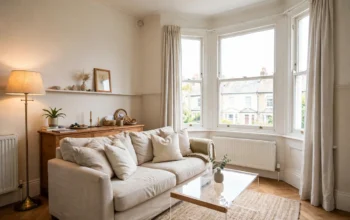
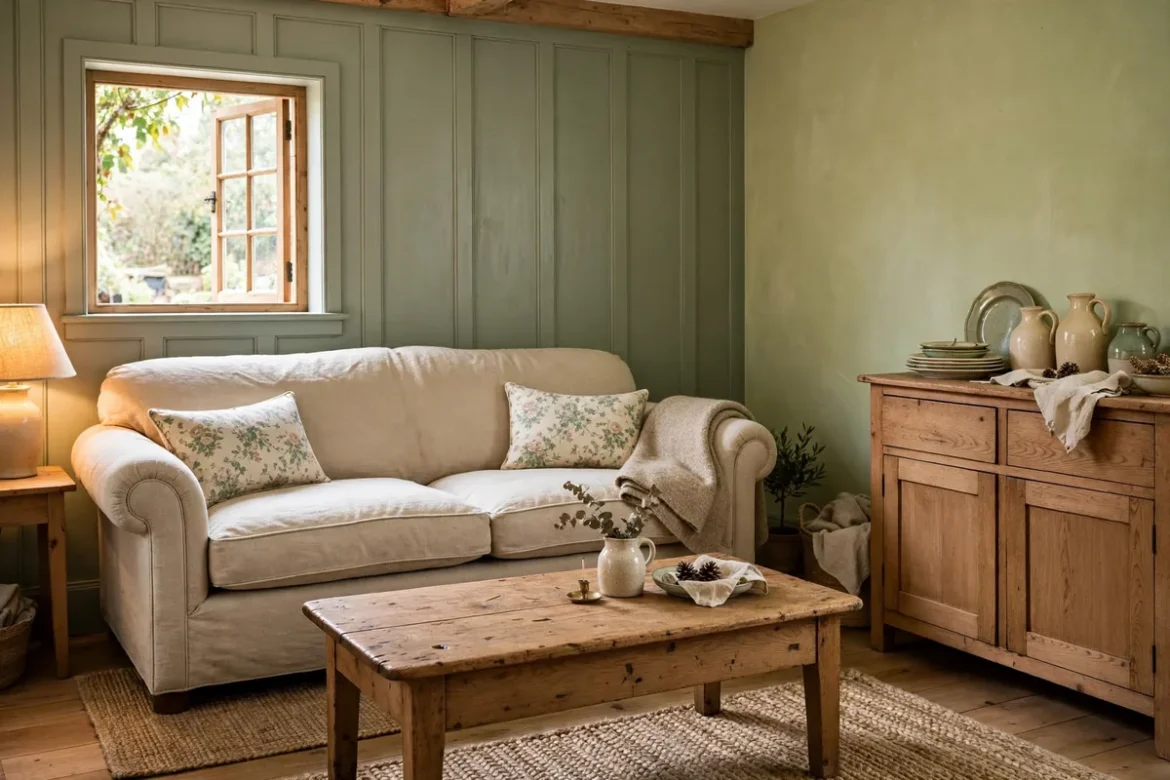
Most people who search for modern cottage ideas do not live in a cottage. They live in a new-build, a Victorian terrace, a 1930s semi or a flat, and they want the warmth of the cottage look without turning their home into a theme park. That is the whole point of the modern version: it takes the materials, colours and comfort of a cottage and leaves the clichés behind. No thatched roof required, no gingham on every surface, and no need to pretend your 2019 new-build is a 300-year-old farmhouse.
The confusion usually comes from cottagecore, the trend version of the look. Cottagecore is a mood: dried flowers, vintage dresses, a fantasy of rural life. Modern cottage is a design decision: natural materials, soft colour, furniture you can sit on properly, and a house that feels lived in rather than staged. It works in a flat as well as in a cottage, because it is about how a room feels, not about the age of the building.
This guide covers the look room by room in a modern UK home: the palette, the living room, kitchen, bedroom, bathroom and hallway, what to fake and what to buy once, how to work around low ceilings and the absence of real beams, and where to source pieces secondhand. The budget detail lives in our guide to interior design budget per room in the UK, which sets out what each room really costs, so this page spends its words on decisions rather than prices.
What Modern Cottage Actually Is
Three rules separate modern cottage from a period replica. First, the palette is soft but not washed out: warm whites, sage green, muted clay, dusty blue and natural wood, with one deeper colour for contrast. Second, the materials are honest: wood, linen, wool, stone, cotton and rattan, with nothing pretending to be something it is not. Third, the furniture is comfortable and used: a sofa you can sit on for an evening, a table with marks on it, chairs that get pulled out every day.
The style sits between two of our other guides. It shares the calm and natural materials of Japandi living room ideas for UK homes, but it is warmer, busier and more patterned than Japandi. It shares the pale palette of Scandinavian bedroom ideas for UK homes, but it keeps more texture, more pattern and more old furniture than Scandi. If Japandi is a quiet room and Scandi is a bright room, modern cottage is a warm room.
The test for any piece is simple: would it look right in a cottage and in a flat? A roll-arm sofa passes. A pine dresser passes. A fake thatched roof light fitting does not. A floral curtain in a small repeat passes. A curtain printed with giant roses and bows does not. When in doubt, choose the plainer version of the thing.
The Palette: Warm, Muted and One Deep Colour
Start with warm white on the walls. In a north-facing room, a cool white turns grey and flat, so choose a warm white with a yellow or pink undertone and test it on the wall in your own light before committing. Our guide to warm white vs cool white paint for UK rooms explains the undertone test in full, and it is worth doing, because the whole cottage palette depends on the white underneath it.
Then add two or three muted colours and one deep one. Sage green works in almost every room and sits well with oak and pine. Dusty blue suits bedrooms and bathrooms. Muted clay or terracotta warms a living room or a kitchen. The deep colour, often a dark green, navy or a deep rust, goes on one thing only: a dresser, a chimney breast, the lower kitchen cabinets, or one bedroom wall. One deep note gives the room its depth. Two deep notes start to fight each other.
Keep the pattern small. A small floral, a ticking stripe, a gingham check in a small scale and a plain linen all sit together happily. Large, loud patterns belong in maximalism, not here. If a pattern looks charming on a cushion, it will probably work. If it looks charming only in a photograph, it will probably tire you within a month.
The Living Room
The living room is where the look is won or lost, because it holds the most furniture and the most pattern. Start with the sofa. A roll-arm sofa in a plain linen or a hard-wearing cotton is the modern cottage default: the rolled arms give the cottage shape, the plain fabric keeps it modern, and a loose cover you can wash is worth more than a perfect colour. Avoid a sofa with a skirt unless the room is genuinely period; in a new-build it reads as fancy dress.
Add one wooden piece with some age to it. A secondhand oak coffee table, a pine blanket box, a small dresser or a wooden side table does more for the look than any amount of new cottage-style furniture. Wood with a few marks on it is the point: it tells the room it has been lived in. If you buy one thing new, make it the sofa. If you buy one thing old, make it the wood.
Layer the textiles, but keep the count low. Two cushions in a small floral or stripe, one plain cushion, and a wool throw folded over one arm is enough. More than that and the sofa starts to look like a shop display. A rug in a muted pattern or a plain wool rug under the front feet of the seating pulls the group together, and in a rented home it also protects the floor.
Lighting should be warm and low. A table lamp on a side table and a floor lamp beside the sofa do more for the cottage feel than a bright ceiling light ever will. Use warm white bulbs, and keep the ceiling light for cleaning rather than for evenings. A fireplace, real or not, is the natural focal point: if you have one, dress it simply with a mirror or one framed print above it, not a row of ornaments.
The Kitchen
A cottage kitchen in a modern home is usually a Shaker-style front, a wooden worktop or a wood-effect worktop, and open shelving used sparingly. If you are not replacing the kitchen, the cheapest version of the look is paint and handles: paint the cabinet fronts a muted sage or dusty blue, fit simple cup handles, and change the worktop accessories rather than the worktop.
Open shelving works when it holds things you actually use every day: plates, bowls, mugs, a few jars. It fails when it holds decorative items that gather dust and need arranging. One shelf of everyday crockery looks like a cottage kitchen. Three shelves of ornaments look like a shop. Keep the rest behind closed doors.
A dresser, freestanding or built in, is the one piece that makes a kitchen read as cottage rather than just painted. It holds the crockery, it gives the room its vertical shape, and it is where the pattern lives: a row of plates, a few jugs, a stack of bowls. If there is no room for a dresser, a single deep shelf above the worktop with the same job does most of the work.
The floor matters more in a kitchen than anywhere else. Wood or wood-effect flooring suits the look; large grey tiles fight it. If the floor is fixed and grey, warm it with a washable runner in a muted pattern and wooden accessories on the worktop: a chopping board left out, a wooden spoon jar, a bread board. Small wooden touches do more than a new floor ever could.
The Bedroom
A cottage bedroom should feel soft, low and calm. Start with the bed: a wooden bed frame, painted or natural, with linen bedding in white or a pale muted colour. Layer a wool throw across the foot of the bed and one cushion in a small pattern. Keep the bedding plain and let the throw and the cushion carry the pattern, because bedding is washed often and pattern fades fast.
Paint the walls warm white and put the colour on the textiles and one piece of furniture: a painted chest of drawers, a bedside table in sage or dusty blue, or a single wall behind the bed in a muted green. A full floral wallpaper on all four walls is the period version, and in a small modern bedroom it shrinks the room and dates fast. One feature wall, or wallpaper on the wall behind the bed only, gives the cottage note without the commitment.
Storage should be wooden and closed. Open wardrobes and open shelving in a bedroom collect dust and visual noise, and a cottage bedroom needs calm more than display. A painted wardrobe, a chest of drawers and a blanket box at the foot of the bed hold everything and keep the room quiet. Keep the surfaces to one item each: a lamp and a book on the bedside table, nothing more.
The Bathroom
The bathroom is the smallest room and the easiest to get wrong, because cottage style in a bathroom can slide into clutter fast. Keep the scheme simple: warm white tiles or painted walls, a wooden bath panel or a wooden stool, and one patterned element only, usually the towels or a blind.
A freestanding bath suits the look, but most UK bathrooms have a standard bath, and that is fine. Paint the bath panel in the room’s muted colour, fit a wooden bath caddy, and use folded towels in a single muted tone. A mirror in a wooden frame, a small wooden stool for folded towels, and a plant that tolerates humidity are enough decoration. Avoid the temptation to fill every shelf with jars and bottles: a bathroom with clear surfaces feels larger and calmer, which is exactly what a small cottage-style bathroom needs.
If the suite is modern and white, do not fight it. White suites are neutral, and the cottage character comes from the wood, the textiles and the colour on the walls, not from the shape of the bath. A roll-top bath is lovely but it is not a requirement, and replacing a working suite for the sake of the look is the most expensive mistake on this page.
The Hallway
The hallway sets the tone for the whole house, and in a cottage-style home it should feel warm the moment the front door opens. Paint it warm white or a pale sage, fit a runner in a muted pattern, and add one closed storage piece: a bench with a lid, a narrow cupboard, or a small chest of drawers. Open hooks spill coats and bags into a small space, so closed storage matters more here than anywhere else.
A mirror above the storage piece helps a narrow hallway feel wider, but keep it slim and fix it properly, because cottage-style hallways in older homes often have uneven walls. One framed print, a small vase of dried flowers or a single hook for the dog lead is enough decoration. The hallway is a passage, not a room, and it should look like one.
What to Fake and What to Buy Once
Some cottage features are worth faking, and some are worth buying properly. The difference is whether the fake will be touched every day.
| Feature | Fake it | Buy it once |
|---|---|---|
| Panelling | Painted MDF panelling on one wall, or a single panelled section behind the sofa | Solid wood panelling in a hallway or bathroom, fitted properly |
| Beams | Leave the ceiling alone; a beam in a 2.4 metre room hangs into the eyeline | Nothing; fake beams in a modern home almost always look fake |
| Limewash | Limewash-effect paint on one wall, which gives the chalky texture without the upkeep | Real limewash only on bare plaster in a period property |
| Fireplace | A simple painted surround with an electric fire or candles, if there is no chimney | A working stove or fireplace, fitted by a professional, only if the house suits it |
| Flooring | Wood-effect vinyl or laminate in a warm tone | Solid wood or engineered wood, fitted once and kept for decades |
| Furniture | Painted secondhand pine or MDF furniture in a muted colour | One good wooden piece: a solid oak table, a dresser, a chest of drawers |
The rule behind the table is simple. Fake the surface, buy the structure. A painted MDF panel looks fine on a wall and nobody touches it. A fake beam is looked at every day and judged every time. A cheap painted dresser can be repainted and used for years; a cheap sofa cannot be fixed and will be replaced within two years.
Low Ceilings, No Beams, Small Rooms
Most modern UK homes have ceilings around 2.4 metres, no beams, and rooms smaller than the cottages in the photographs. The look still works, but it needs adjusting. Keep the furniture low: a low sofa, a low coffee table, a low bed. Tall furniture in a low room makes the ceiling feel lower. Keep the wall colour pale and the floor warm, and let the depth come from the one deep-coloured piece rather than from dark walls.
Do not add fake beams. In a low room they hang into the eyeline, they collect dust, and they draw attention to the ceiling height rather than hiding it. If the ceiling feels bare, a simple picture rail or a painted ceiling in a warm white does more than any beam. The same goes for a fake fireplace: a simple surround with candles inside it looks calm, while an ornate fake surround looks like a stage set.
Small rooms need the same discipline as the whole house: fewer pieces, each one doing a real job. A small living room with a sofa, one wooden table, a lamp and a rug reads as cottage. The same room with a sofa, two tables, three chairs, a dresser, a bookshelf and a plant stand reads as a storage unit. Edit first, then decorate.
Sourcing It Secondhand
Modern cottage is the easiest style to source secondhand, because the look wants furniture with some age on it. Antique dealers, charity shops, eBay and Facebook Marketplace all carry the wooden pieces the style needs, usually for far less than new cottage-style furniture, and a secondhand piece with a few marks already has the character a new piece is trying to imitate.
Buy wood first. Oak tables, pine dressers, wooden chests and blanket boxes are common secondhand and easy to judge: check that drawers run, doors close, and the piece is solid rather than wobbly. Painted pine is forgiving, because a new coat of paint hides most sins. Avoid secondhand upholstery unless you can see it in person and check it properly; a sofa is the one piece worth buying new, because you sit on it every day and you cannot see what is inside it.
Check measurements before you buy. A dresser that fits a cottage kitchen may not fit a new-build kitchen, and a secondhand table that looks small in a photograph can be 180 centimetres long. Measure the space, measure the door it has to come through, and measure the car it has to fit in. A bargain that does not fit through the front door is not a bargain.
Mistakes to Avoid
The most common mistake is too much pattern. Floral curtains, floral cushions, floral wallpaper and a floral rug in one room cancel each other out and the room looks busy rather than cosy. Pick one patterned element per room and keep the rest plain.
The second mistake is buying a full matching set. A matching set of cottage-style furniture, all bought new from the same range, looks like a showroom. The style works because the pieces look collected over time, not bought in one afternoon. Mix one new piece with two secondhand pieces and the room will look like a home.
The third mistake is confusing cottage with clutter. A cottage-style room has things in it, but every thing has a place. Ornaments on every surface, books stacked on the floor, and jars on every shelf make a room feel smaller, not cosier. If a room feels crowded, remove one piece of furniture before adding any decoration.
The fourth mistake is ignoring the light. A cottage palette in a north-facing room needs warm whites and warm lighting, or it turns grey. Test paint in the room, in daylight and in the evening, before painting the whole room. The undertone test in our warm white vs cool white paint guide takes ten minutes and saves a repaint.
The fifth mistake is spending the budget on decoration before the structure. Paint, flooring and one good wooden piece change a room. Cushions, throws and ornaments finish it. Buying the finishing touches first leaves a room that is decorated but not designed, and the decoration will not survive the first time the room is used properly.
Frequently Asked Questions
Does modern cottage style work in a new-build home?
Yes, and it is one of the best styles for a new-build, because it adds warmth and texture to rooms that can otherwise feel plain. Keep the furniture low, the palette warm, and the pattern small, and avoid fake beams and fake fireplaces, which are the two features that look wrong in a new-build. The style is about materials and colour, not about the age of the building.
Is modern cottage the same as cottagecore?
No. Cottagecore is a trend built around a romantic idea of rural life: dried flowers, vintage dresses and a fantasy of living in a cottage. Modern cottage is a design style: natural materials, soft colour, comfortable furniture and a house that works for modern life. The two share some colours and materials, but modern cottage does not need a theme, and it works in a flat as well as in a cottage.
What is the cheapest way to get the look?
Paint and secondhand wood. Paint the walls warm white, paint one piece of furniture in a muted colour, and buy one secondhand wooden piece, usually a coffee table or a dresser, from a charity shop, eBay or Facebook Marketplace. Add a plain linen cushion and a wool throw, and the room will read as modern cottage without any new furniture. Our interior design budget per room guide sets out where the money shows most in each room.
Can I use modern cottage style in a rented home?
Yes. Most of the look is furniture, textiles and paint on furniture rather than paint on walls, so it suits rented homes well. A roll-arm sofa with a washable cover, a wooden coffee table, linen cushions, a rug and warm lamps all move with you. If you cannot paint the walls, use the textiles and the wood to carry the colour, and keep the walls as they are.
How do I stop a cottage-style room looking cluttered?
Give everything a place and keep surfaces clear. One patterned element per room, closed storage for the things you use every day, and no more than three items on any surface. If a room feels crowded, remove one piece of furniture before adding anything new. A cottage room should feel full, not crowded, and the difference is whether you can see the surfaces.