Most UK sellers do not move out before they sell. They stage the house, list it, and keep living in it while the viewings happen, cooking dinner in the kitchen they have just styled and sleeping in the bedroom they have just photographed. That is occupied staging, and it is a different job from staging an empty house.
An empty house is staged with rented furniture brought in for the photographs. A lived-in house is staged with what is already there: furniture is edited and rearranged, personal items are packed away, and the rooms are kept ready for a viewing at short notice. It costs less, because there is no furniture hire, and it is harder, because daily life keeps undoing the work. This guide covers how to do it in a UK home: the one-week edit that comes first, which rooms matter most, the daily reset that keeps the house show-ready, and the viewing-day kit that gets you out of the door in minutes.
For the full room-by-room method, including kerb appeal, depersonalising and a staging timeline before listing, read our guide to how to stage a house to sell in the UK. This page is the companion to it: it deals only with the problem of staging a house you are still living in.
Start With the One-Week Edit
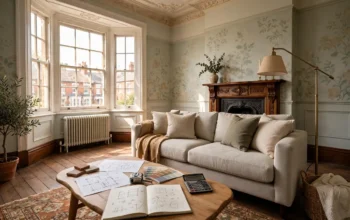
Occupied staging starts with an edit, not with shopping. Go through every room and pack away roughly half of what is on show: the books you have already read, the ornaments, the extra cushions, the small appliances you use once a month, the clothes that are out of season, the children’s drawings and the family photographs. You are moving anyway, so think of it as packing early rather than extra work.
The test for each item is simple: do I use this every day? If not, it goes into a box. Boxes go into the garage, the loft or a self-storage unit, never into a cupboard a buyer will open. A wardrobe stuffed to the door tells a buyer there is no storage in the house, and a cupboard full of packed boxes is worse than a cupboard left half empty.
Start in the rooms buyers judge first, and leave the rooms they barely notice until last. The living room, the main bedroom and the kitchen are the rooms that decide whether a buyer books a second viewing or moves on to the next listing. The guest bedroom and the box room can wait. Once the edit is done, the house should look like a home that is easy to live in, not a home that has been emptied.
The other half of the edit is mental. While the house is on the market, it is no longer quite your home; it is a product you are presenting to strangers. That shift makes the daily compromises easier to accept: the bathroom shelf that stays empty, the kitchen worktop that stays clear, the bed that gets made properly every morning. It is temporary, and it ends the day the sale completes.
Which Rooms to Stage First
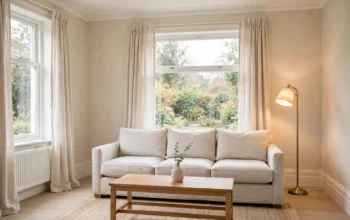
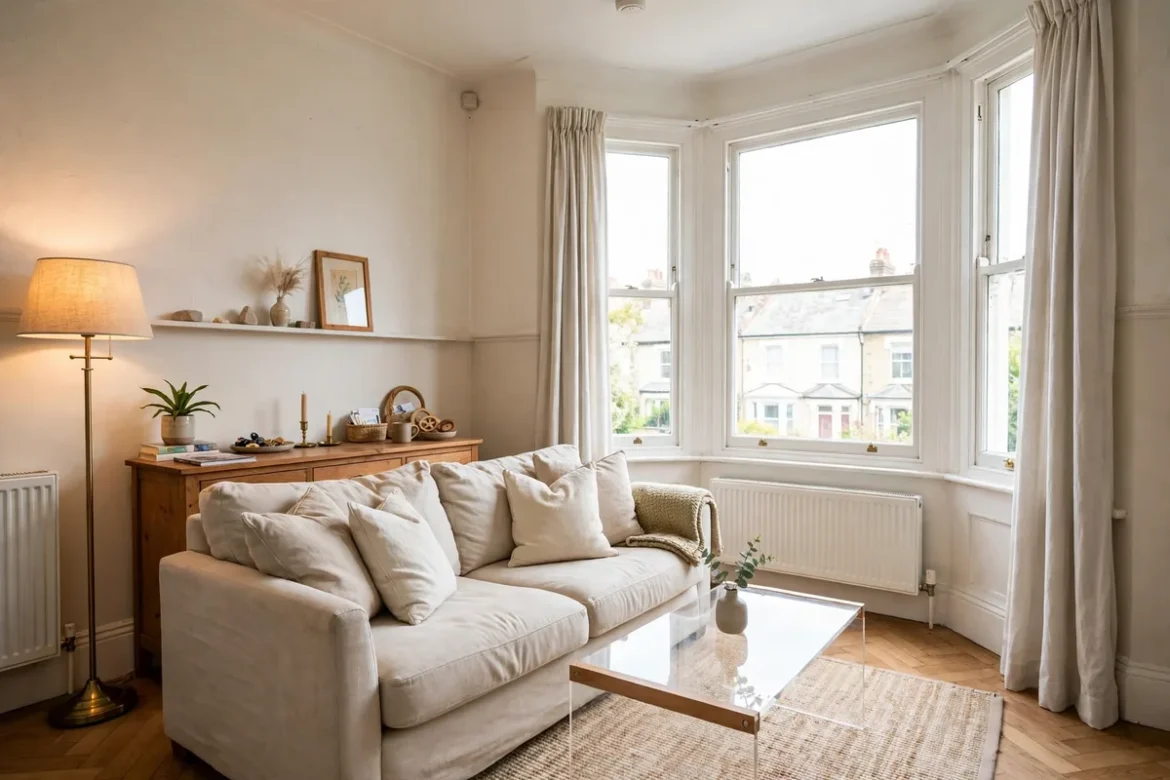
If time is short, spend it in this order. The living room comes first, because it is the room in the first photograph and the room buyers spend longest in on a viewing. Clear the surfaces to one item or nothing, pull the sofa slightly off the wall, put the front feet of the seating on the rug, and open the curtains fully. A living room that is bright and uncluttered forgives a plain kitchen; a cluttered living room makes the whole house feel small.
The main bedroom comes second. Make the bed every morning with straight, matching bedding, clear the bedside tables to a lamp and one item, and close the wardrobe doors. A bedroom that is calm and tidy reads as a room with space to relax in, which is exactly what a buyer is looking for after a day of viewings.
The kitchen comes third. Keep the worktops clear except for the kettle and one or two everyday items, empty the sink, put the dish rack away, and clear the front of the fridge. A kitchen worktop crowded with appliances reads as a kitchen with no storage, even when the cupboards are full of space. The same rule applies in the bathroom: clear surfaces, matching towels folded straight, and the toilet lid down.
The 15-Minute Daily Reset
The edit is a one-off job. The reset is the daily habit that keeps it working, and it is what separates a house that shows well from a house that looked good on photo day and never again. Run it every morning, and again before any viewing, and it takes about fifteen minutes once the edit is done.
| Room | Two-minute job | What to hide |
|---|---|---|
| Living room | Plump cushions, fold the throw, clear the coffee table | Remote controls, chargers, post, school bags |
| Kitchen | Wipe worktops, empty the sink, sweep the floor | Washing up, dish rack, bins, pet bowls |
| Main bedroom | Make the bed, straighten the bedding, open the curtains | Clothes, laundry basket, phone chargers |
| Bathroom | Wipe the sink, fold towels straight, close the lid | Toiletries, medicines, toothbrushes, bath mat if wet |
| Hallway | Hang coats, put shoes away, clear the table | Post, keys, dog lead, sports kit |
The trick is to keep the reset short enough that you will actually do it. Fifteen minutes every morning beats a two-hour panic clean before a viewing, because a viewing is often arranged with only a few hours’ notice, and sometimes less. If the reset has become a habit, a short-notice viewing is a minor interruption rather than a crisis.
The Viewing-Day Kit
Even with a daily reset, a viewing needs a final sweep. The fastest way to do it is a viewing-day kit: one large basket or laundry bag per room, kept in a cupboard, that you can sweep stray items into in minutes. Toys go in the living room basket, toiletries in the bathroom basket, and the baskets go into the boot of the car before the viewers arrive. Nothing is thrown away and nothing is hidden in a cupboard a buyer will open; it is simply out of the house for an hour.
The kit also covers the two things that undo a viewing fastest: cooking smells and pets. Avoid cooking anything strong smelling on a viewing day, and open the windows for half an hour before the viewers arrive rather than lighting a scented candle to cover a smell. A candle reads as a cover-up; fresh air does not. Pet beds, food bowls, litter trays and leads should go in the car with the baskets, and the pet should go with them, to a neighbour, a friend or a walk, for the length of the viewing. A buyer who is allergic to cats or nervous around dogs will not enjoy a viewing with either in the room, and a pet in a photograph is one of the mistakes our guide to staging mistakes that make listing photos look worse warns against.
Before you leave, do one last walk-through with your phone camera. Photograph each room and look at the pictures, not the rooms. A phone photograph shows what a buyer will see: the cable you stopped noticing, the cushion that has slipped, the bin you forgot to move. Fix what the photographs show, switch on the lamps, and leave the house looking its best.
Living With Children and Pets
Children and pets do not make occupied staging impossible; they make the systems matter more. Give each child one basket for the things that spread fastest, usually toys and school kit, and make emptying it into the basket part of the morning routine. Keep the children’s bedrooms presentable but not sterile: a tidy bed, clear floor and one or two items on show is enough. Buyers with children of their own will understand a lived-in children’s room; buyers without them will still judge the house by the main rooms.
Pets need the same treatment as children: a routine, not a battle. Feed them at set times so bowls are not out all day, keep litter trays and beds in one room that can be closed off, and vacuum the rooms buyers will see most often. Pet hair on a sofa or a rug photographs badly and smells worse in person, and it is the kind of detail a buyer remembers after the viewing.
What It Costs
Staging a home you live in costs mainly time. The edit takes a few days spread over a week, the reset takes fifteen minutes a day, and the finishing items are small: matching towels, bulbs of one colour temperature, window cleaner, and perhaps a larger rug if the current one is too small for the seating. Most sellers spend nothing beyond that, and for most occupied homes in reasonable condition that is enough.
A professional stager can still be worth it, and for an occupied home the best value is usually a consultation rather than a full styling day. A consultation buys a professional eye on the plan: which rooms to prioritise, which furniture to remove, and what the photographs should show, while the seller does the physical work. A full styling day, where the stager moves furniture, dresses rooms and leaves the house ready for photographs, makes sense when time is genuinely short, when the layout is unusual, or when the photography set needs to be handled to a professional standard. Our guide to home staging cost in the UK sets out the difference between DIY and professional staging, and between occupied and empty homes, so you can decide before you spend.
If you are still working through the clutter before the edit begins, our guide to how to declutter a home before moving covers the same ground room by room, and it is the natural first step before any staging starts.
Frequently Asked Questions
Can you stage a home while you are still living in it?
Yes, and most UK sellers do. Occupied staging works with the furniture and belongings already in the home, editing them down and arranging them so buyers can picture their own life in the rooms. It is cheaper than staging an empty home, because there is no furniture hire, and it needs a daily reset routine to stay show-ready between viewings.
How long does the house need to stay show-ready?
From the day the photographs are taken until the sale completes, which can be weeks or months. That is why the reset has to be a habit rather than a one-off effort. A fifteen-minute routine every morning is sustainable for months; a two-hour clean before every viewing is not, and it will be the first thing to slip when the process drags on.
Should I rent furniture to stage a lived-in home?
Usually not. Rented furniture makes sense in an empty home, where there is nothing for buyers to judge scale by. In a lived-in home the furniture is already there, and the work is editing and rearranging it. Rent only a single piece if a specific room cannot be fixed with what you own, for example a larger rug for the living room or a bedside table for the main bedroom.
Do I need to move out for the photographs?
No. The photographs are taken while you live there, which is why the edit and the photo-day checklist matter. Clear the surfaces, depersonalise for the day, open the curtains and switch on every lamp, and the photographs will show the house at its best. The photographer works around you, and you can put the personal items back afterwards.
What is the single most important thing in occupied staging?
The daily reset. The edit gets the house ready once, but the reset is what keeps it ready for the viewing that is arranged with two hours’ notice on a Tuesday. A house that is always nearly ready is a house that sells, because every viewing sees it at its best rather than catching it on a bad day.