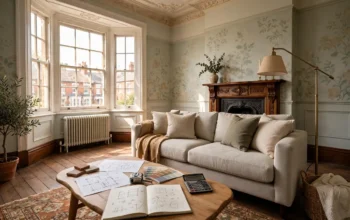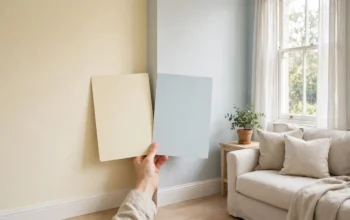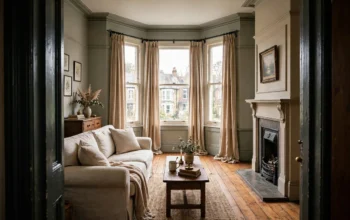
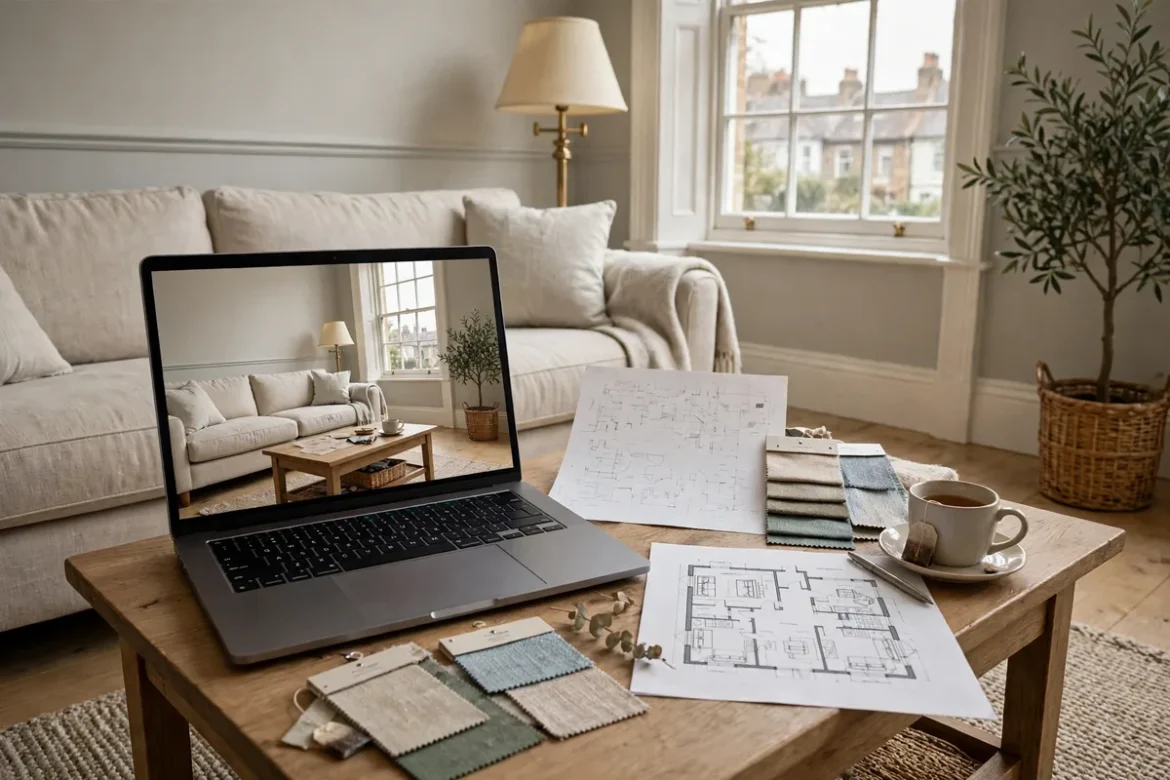
Hiring an interior designer used to mean finding someone local, inviting them into your home, and paying for site visits and project management on top of the design itself. Online interior design, usually called e-design, removes the visits and the management and keeps the design. You send the designer your measurements, photographs and a brief, they work on your room digitally, and you receive a design pack that you carry out yourself.
This guide explains what e-design is, what you actually receive, how it differs from a full-service designer, who it suits, how pricing works, and the questions to ask before you book. The consensus below is drawn from the UK designers’ own published guides checked for this article, including House Designer, Katherine Elizabeth Interiors, Studio 33 Design, Anna K Studio, Studio Makin and The Living House, restated here with their sources, not our own survey. No studio is recommended here, and the prices named are per-designer examples from November 2026, not a standard market rate.
What Is E-Design, and How Is It Different From Hiring a Designer in Person?
E-design is a fully remote, professional design service. You send measurements, photographs or a floor plan and a written brief, and the designer works digitally and sends you a finished design pack. There are no site visits and no contractor management. You implement the design yourself, buying the furniture and arranging any decorating or fitting.
That makes it different from two things people often confuse it with. It is not a room-planner app or an automated shopping list. A real designer makes the decisions, chooses the palette and draws the layout. And it is not a cheaper version of full-service design that happens to be online. The deliverable is different: a plan you carry out, rather than a project someone manages for you.
It is also known as virtual interior design or online interior design, and the names are used interchangeably by UK studios. Whatever the name, the test is the same: does a named designer produce a design for your actual room, from your measurements, or does the service only sell you a generic template? A genuine e-design service is built around your room.
What You Actually Receive in an E-Design Package
Packages differ between studios, so the list below is what the guides checked describe as the usual contents, not a promise from any one designer. Always check the exact inclusions before you pay.
A mood board and colour direction comes first. This sets the palette, the materials and the feeling of the room, usually with paint colours, fabric references and images that show how the pieces work together. It is the part of the pack that stops the room becoming a collection of unrelated purchases.
A furniture layout drawn to scale comes next. This is the most practical part of the pack, because it shows where each piece sits in your actual room, with the walkways and clearances worked out before you order anything. A layout drawn from your measurements is the difference between a sofa that fits and a sofa that blocks the door.
Photorealistic 3D renders usually follow. These show the finished room from one or two viewpoints, so you can see the palette, the furniture and the lighting together before you spend anything. Renders are a visual check, not a guarantee: they show the design intent, and the real room will still depend on the exact products you buy.
A sourcing or shopping list with direct links to UK retailers completes the pack. Each item is listed with the retailer, the size and the price at the time the list was made, so you can order the pieces yourself. Some packs also include a lighting plan, paint specifications, styling notes or a written guide to putting the room together.
What you do not receive is just as important. Nobody measures the room for you, nobody buys or delivers the furniture, nobody books a painter or an electrician, and nobody checks the finished room against the plan. That work is yours, and it is the reason e-design costs less than full service.
How E-Design Works, Step by Step
The process is similar across the studios checked, and knowing the steps helps you judge whether a service is organised or improvised.
First, you complete a questionnaire or brief. This covers the room, how you use it, what must stay, what you dislike, your style preferences and your budget for furniture and finishes. A good brief also asks about the property type, because a Victorian terrace with alcoves and a chimney breast needs different decisions from a new-build box room.
Second, you send measurements, photographs and a floor plan if you have one. The designer works from what you send, so accurate measurements matter more here than in any other kind of design service. Measure every wall, note the ceiling height, the door swings, the radiator positions and the window sizes. Photograph every wall in daylight, and include the floor, so the designer can see what the renders must work with.
Third, you have a video consultation, usually 30 to 45 minutes. This is your chance to talk through the brief, answer the designer’s questions and agree the direction before any design work starts. Treat it as a working meeting, not a sales call, and use it to check that the designer understands how the room is actually used.
Fourth, the designer produces the design pack. Turnaround is faster than full service because there are no site visits to schedule. House Designer quotes around three weeks for a basic package, and Studio Makin and The Living House quote around three to four weeks per room, with The Living House working to about four weeks after the video call. Allow for that in your own timetable, especially if you are ordering furniture with long lead times.
Fifth, you review the pack and request refinements. Most packages include a set number of revision rounds, and Studio 33, for example, includes two rounds of refinements. Check how many rounds your package includes before you book, because changes beyond that number are usually charged extra.
Finally, you buy and implement. You order from the shopping list, arrange any decorating or fitting, and put the room together following the layout and the renders. If a product is discontinued between the pack and your order, ask the designer for a substitute, or find a match in the same size, colour family and price band.
E-Design vs Full-Service Design: The Honest Comparison
The two services solve different problems, and the right choice depends on what your project actually needs.
E-design: no site visits, you measure and photograph. Full-service design: designer visits, measures and surveys.
E-design: you receive a concept, layout, renders and shopping list. Full-service design: concept, layout, procurement and installation oversight.
E-design: no contractor management, you arrange trades. Full-service design: designer manages trades and site work.
E-design: you buy everything yourself. Full-service design: designer can buy on your behalf.
E-design: faster, around 3 to 4 weeks per room. Full-service design: slower, visits and coordination take time.
E-design: any designer anywhere in the UK. Full-service design: usually local, travel limits the choice.
E-design: lower cost, no visits or management. Full-service design: higher cost, visits and management are charged.
E-design: best for furnishing and decorating one room. Full-service design: best for structural work, renovations and fitted furniture.
Full service is hands-on and in person, with site visits, contractor management and someone on site through the project, and it suits structural work and major renovations. E-design suits furnishing and decorating projects with no building work. That is the line every source draws, and it is the line to use when you decide. If your project needs a wall moved, a kitchen refitted or fitted joinery built, e-design is the wrong service, however good the renders look.
Geography is the other real difference. With e-design you can work with any designer anywhere in the UK, not just the ones near you, which matters if you live somewhere with few local designers or you want a particular style. With full service, the designer has to travel to your home, so the choice is local by necessity.
Who E-Design Suits, and Who Should Skip It
E-design suits you if the room needs furnishing and decorating rather than building work, if you are happy to measure your own room and take your own photographs, and if you are confident about ordering furniture and arranging any decorating yourself. It suits a single room best, such as a living room, bedroom or home office where the layout and palette are the problem, not the structure.
It also suits you if you live far from the designers whose work you like, or if your budget covers a design fee but not full project management. For a straightforward room, a remote design pack can be the most cost-effective way to get professional input, because you are paying for decisions, not for someone’s travel time.
Skip e-design if the project involves structural changes, a new kitchen or bathroom, fitted wardrobes or joinery, or anything that needs trades coordinated on site. Skip it too if you cannot measure accurately, or if you want someone to check the room in person before decisions are made. A designer who has never seen the room cannot spot a sloping floor, a damp patch or a radiator that rules out the planned layout.
It is also a weak fit if you want the room finished without managing suppliers yourself. If the idea of ordering furniture, chasing deliveries and booking a painter feels like a second job, the saving on the design fee will not feel like a saving for long. In that case, read our guide to how much an interior designer costs in the UK and compare the full-service figures before you decide.
How E-Design Is Priced, and What the Fee Does Not Cover
E-design is usually priced as a fixed package per room, which is the clearest model for comparing quotes, because you know the total before work starts. Some studios price by the square metre instead, and some sell single-problem sessions, such as a one-hour consultation or a layout-only fix, for a smaller fee.
The figures below are per-designer examples taken from the studios’ own published pages in November 2026. They show how pricing works, not what you should expect to pay, and no studio is recommended here. Katherine Elizabeth Interiors lists three packages at £345, £695 and £1,195 per room, depending on the level of service. Studio 33 Design lists a Signature Room package from £695 per room. Studio Makin lists a Complete Package at £1,295 per room. The Living House lists a Complete Design package at £120 per square metre including VAT, with a minimum of £750 per room, alongside a Power Hour session at £475 and a Layout Fix at £180.
What changes the price is the level of package, the size of the room, and how many revision rounds are included. A concept-only package with one render costs less than a full pack with 3D renders, a detailed shopping list and two revision rounds. A large room costs more than a small one under per-square-metre pricing. Always ask what is included at the quoted price, and what counts as an extra.
The design fee does not include furniture, decorating, fitting or building work. That is consistent across the sources checked: The Living House and Studio Makin both state that design fees exclude the cost of the items and the work itself. So the fee buys the plan, and the furniture, paint, lighting, delivery charges and any trades are separate spending on top of it. Check whether VAT is included in the quote, because some designers quote excluding VAT, which adds 20 percent to the total.
For the full picture of what designers charge across all four models, including hourly rates and full-service fees, read our guide to how much an interior designer costs in the UK. That guide carries the full cost tables, so they are not repeated here.
Questions to Ask Before You Book
Ask every designer the same questions, in writing, before you choose. The answers matter more than the headline price.
First, what exactly is included? Which deliverables, how many renders, how many revision rounds, and does the shopping list link to UK retailers with current prices? A concept and a shopping list is not the same service as a measured layout with full specifications, even if both are called a room design.
Second, who does the design? Is it a named designer whose previous work you can see, and have they worked on your type of UK property before? A portfolio of large open-plan houses is not much help if your room is a Victorian terrace with alcoves and a through-lounge.
Third, what do they need from you, and what happens if your measurements are wrong? Ask what format they want the measurements and photographs in, and whether they will flag anything that looks inconsistent before they start designing.
Fourth, what is the turnaround time, and what happens if it slips? A design pack delivered in three weeks is not the same offer as one delivered in eight weeks, even at the same price, especially if you are ordering furniture with long lead times.
Fifth, what is the VAT position, the payment schedule, and the change process? Avoid paying the full fee before any work is delivered, and get the revision allowance and the price of extra changes in writing.
Finally, ask to see an example of a finished pack for a room like yours. It does not need to be a full client pack, but it should show the standard of layout, renders and shopping list you will receive. Our guide to the interior design process explains the stages a project should follow, from brief to installation, so you can judge whether a quote covers those stages or skips some of them.
How to Get the Most From an E-Design Package
The quality of what you receive depends heavily on the quality of what you send, because the designer never sees the room.
Measure twice, and measure everything. Wall lengths, ceiling height, door and window positions, radiator sizes, and the clearances around the furniture you plan to keep. Our guide to small living room layout ideas for UK terraced houses gives the clearance numbers that matter, including 60cm walkways and 1.8m to 2.4m viewing distances, and the same numbers are what your designer needs from you.
Photograph in daylight, with the curtains open and the lights off, so the designer sees the real light in the room. Photograph every wall, the floor, and anything that must stay, such as a fireplace, fitted storage or a radiator in an awkward place. A photograph taken at night under warm lamps hides the daylight colour of the room.
Write the brief as if the designer knows nothing about your household. Who uses the room, when, and for what? What must the room do that it does not do now? What is your budget for furniture and finishes, separately from the design fee? What do you already own and want to keep? A brief that says “modern and cosy” tells the designer almost nothing. A brief that says “two adults and a toddler, television every evening, a piano that must stay, and a budget of £2,000 for furniture” gives them something to design around.
Be honest about the budget for the room itself, not just the design fee. A design built around furniture you cannot afford is worse than no design at all, because you will substitute pieces one by one until the layout no longer works. If the budget is tight, say so, and ask the designer to phase the shopping list, with the pieces that define the layout first and the accessories later.
Check the renders against your measurements before you order anything. Measure the sofa, the table and the rug in the layout against the wall they are drawn on, and check the delivery route through your front door and hallway. A layout that works on screen can still fail if a piece cannot get into the room.
Mistakes to Avoid
The most common mistake is booking e-design for the wrong kind of project. If the work needs building, plumbing, electrics or fitted joinery, a remote design pack cannot manage it, and the money is better spent on a full-service designer or an architect. Every source limits e-design to furnishing and decorating, and that limit is real.
The second mistake is sending wrong measurements. A sofa drawn to fit a wall that is actually 20cm shorter will not fit, and the designer cannot know unless you measure again. Measure every wall, and measure the height of anything the furniture must clear, such as a radiator or a windowsill.
The third mistake is a vague brief. If you do not say what the room must do, the designer will guess, and the guess will be based on a typical room, not yours. The more specific the brief, the more useful the pack.
The fourth mistake is ordering everything before checking the layout. Order the pieces that define the layout first, such as the sofa and the main storage, check them in the room against the plan, and then order the rest. A rug or a lamp bought early is easy to return. A sofa bought on a layout that was never checked is not.
The fifth mistake is ignoring delivery lead times. A design pack delivered in three weeks does not mean a finished room in three weeks. Furniture, especially sofas and made-to-order pieces, can take eight to twelve weeks, so order the long-lead items first and let the accessories follow.
The sixth mistake is choosing on price alone without checking inclusions. A cheap package with no renders, no revision rounds and a shopping list without links is not the same service as a higher-priced package with all three, even if both are called e-design. Compare what is included, not just the headline figure.
Frequently Asked Questions
Is e-design as good as hiring a designer in person?
It is as good for the job it is designed for, and weaker for the job it is not. For furnishing and decorating a room, a remote pack with a measured layout, renders and a shopping list can be excellent. For structural work, renovations or anything that needs trades managed on site, an in-person designer is the right choice, because e-design does not include site visits or project management.
How long does e-design take?
Faster than full service, because there are no site visits to schedule. The studios checked quote around three weeks for a basic package and three to four weeks per room for a fuller pack, measured from the video consultation. Allow extra time for ordering and delivery, which is separate from the design time.
How much does e-design cost in the UK?
It varies by studio and by package level. The per-designer examples in this guide range from around £345 to £1,295 per room for fixed packages, with some studios charging per square metre instead. Treat those as examples of how pricing works, not as a market rate, and read our guide to how much an interior designer costs in the UK for the full range of designer fees. Always confirm whether VAT is included.
Do I need to measure my own room?
Yes. Accurate measurements, photographs and a floor plan if you have one are the foundation of the whole service, because the designer works entirely from what you send. Measure every wall, the ceiling height, door swings, radiators and window positions, and photograph every wall in daylight.
Can e-design work for a rented home?
It can, provided the design stays within what your tenancy allows. A layout, palette and shopping list of freestanding furniture translate well to a rented room, and the remote format suits renters who may move. Avoid anything that needs fixing to walls or changing fittings unless you have written permission from your landlord.
Can I use e-design for a whole house?
You can, but it is usually bought room by room, and the cost and the coordination grow with each room. For a whole house, ask how the designer keeps a consistent palette and style across phases, so rooms finished months apart still belong together, and consider whether a full-service designer would be better value once several rooms are involved.