Interior Design Process: Complete Guide to Every Stage of a Successful Project
Designing a home, office, restaurant, or retail space involves much more than choosing furniture and paint colors. A successful project follows a structured interior design process that helps turn ideas into functional, attractive, and practical spaces.
Whether you’re renovating a single room or building a new property from the ground up, understanding the process can save time, reduce costly mistakes, and help you make informed decisions throughout the project.
This guide explains every stage of the interior design process, what clients should expect, and how professional designers move from concept to completion.
What Is the Interior Design Process?
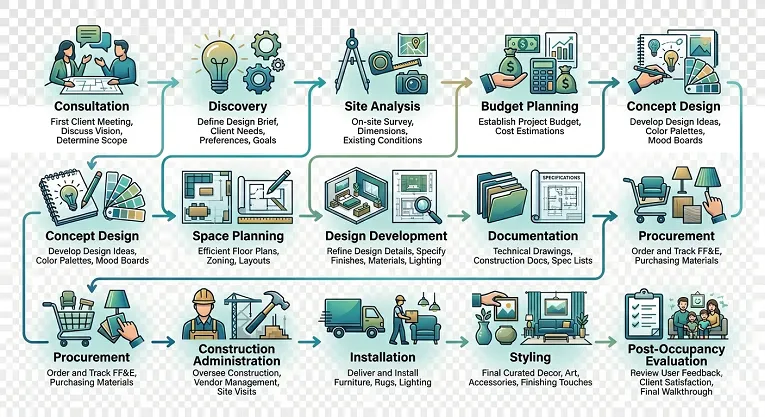
The interior design process is a step-by-step framework that designers use to plan, develop, execute, and complete interior spaces. It includes research, planning, concept creation, design development, procurement, project management, installation, and final evaluation.
Rather than making design decisions randomly, designers follow a systematic approach to ensure that every choice supports the client’s goals, budget, lifestyle, and functional needs.
Why Every Successful Project Follows a Process
A structured process helps prevent common project problems such as:
- Budget overruns
- Design inconsistencies
- Construction delays
- Poor space utilization
- Last-minute design changes
- Communication breakdowns
Each phase builds on the previous one. Skipping steps often leads to expensive corrections later in the project.
For example, changing a furniture layout after electrical work is complete may require relocating outlets, lighting fixtures, or built-in cabinetry. Addressing these decisions during the planning stage helps avoid unnecessary costs.
Residential vs Commercial Interior Design Processes
The overall workflow is similar for both residential and commercial projects, but the priorities often differ.
| Residential Projects | Commercial Projects |
|---|---|
| Focus on lifestyle and comfort | Focus on productivity and efficiency |
| Personal preferences drive decisions | Business goals drive decisions |
| Smaller project teams | Larger project teams |
| Fewer regulations | More compliance requirements |
| Emotional decision-making | Performance-based decision-making |
Commercial projects often require additional coordination with architects, engineers, contractors, facility managers, and regulatory agencies.
Quick Summary
The interior design process is a structured system that transforms ideas into finished spaces through planning, design, documentation, procurement, and implementation.
What Happens Before the Design Work Begins?
Many people assume design starts with selecting colors and furniture. In reality, successful projects begin with understanding the client and the space.
This early phase creates the foundation for every decision that follows.
Initial Consultation
The consultation is typically the first meeting between the client and the designer.
The purpose is to discuss:
- Project goals
- Scope of work
- Budget expectations
- Timeline requirements
- Functional needs
- Design preferences
This meeting also helps determine whether the designer and client are a good fit for working together.
A productive consultation often prevents misunderstandings later in the project.
Understanding Goals and Lifestyle Needs
Good design starts with understanding how people use a space.
For a family home, questions may include:
- How many people live here?
- Do you entertain frequently?
- Do you work from home?
- Do you have pets?
- What storage challenges do you face?
For an office project, questions may include:
- How many employees use the space?
- What type of work is performed?
- How often are meetings held?
- What technology requirements exist?
The answers influence every design decision.
Gathering Inspiration
Designers often ask clients to collect inspiration from:
- Magazines
- Design websites
- Social media platforms
- Previous projects
- Travel experiences
The goal is not to copy existing designs but to identify preferences, styles, colors, materials, and spatial qualities.
Many designers create inspiration boards to organize ideas and establish a clear visual direction.
Creating the Client Brief
The client brief serves as the project’s roadmap.
It typically includes:
- Project objectives
- Functional requirements
- Budget parameters
- Timeline expectations
- Design preferences
- Special requests
A detailed brief helps keep the project aligned from start to finish.
Quick Summary
Before any design work begins, designers gather information, define goals, understand user needs, and create a project brief that guides future decisions.
Site Analysis and Project Assessment
Once project goals are established, the next step is understanding the physical space.
This stage provides the information needed to develop realistic design solutions.
Measuring the Space
Accurate measurements are essential.
Designers typically document:
- Room dimensions
- Ceiling heights
- Door locations
- Window locations
- Structural elements
- Existing fixtures
Even small measurement errors can create significant problems during installation.
For example, a custom sofa may not fit through a doorway if measurements are inaccurate.
Existing Conditions Review
The designer evaluates the current state of the space.
Areas commonly reviewed include:
- Flooring condition
- Wall condition
- Ceiling systems
- Lighting infrastructure
- Electrical systems
- Plumbing systems
- HVAC systems
Understanding existing conditions helps identify opportunities and constraints.
Identifying Opportunities and Constraints
Every space has strengths and limitations.
Opportunities may include:
- Natural light
- High ceilings
- Architectural character
- Open floor plans
- Scenic views
Constraints may include:
- Structural columns
- Low ceilings
- Limited storage
- Plumbing locations
- Building regulations
A successful design works with these realities rather than fighting against them.
Site Photography and Documentation
Designers typically create detailed records through:
- Photographs
- Measurements
- Floor plans
- Notes
- Digital surveys
This information becomes the foundation for design development.
Real-World Example
Imagine a homeowner wants an open-concept kitchen.
During the site assessment, the designer discovers that a wall contains structural supports. Removing the wall would require significant engineering work and increase costs.
By identifying this constraint early, the design team can explore alternative solutions before construction begins.
Quick Summary
Site analysis provides the technical information needed to create practical and achievable design solutions.
Budget Planning and Financial Strategy
One of the biggest reasons projects fail is poor budget planning.
A realistic financial strategy helps align expectations with available resources.
Establishing Budget Priorities
Every project has priorities.
Some clients prioritize:
- Custom furniture
- Premium finishes
- Smart home technology
- Luxury lighting
- Architectural upgrades
Others focus on functionality and durability.
Identifying priorities early helps allocate funds effectively.
Understanding Major Cost Categories
Most interior design budgets include:
| Category | Typical Expenses |
|---|---|
| Design Fees | Consultation, planning, drawings |
| Construction | Demolition, framing, finishes |
| Furniture | Sofas, tables, seating |
| Lighting | Decorative and functional lighting |
| Materials | Flooring, paint, tile |
| Accessories | Artwork, rugs, decor |
| Contingency | Unexpected expenses |
Understanding these categories helps prevent financial surprises.
Building a Contingency Fund
Unexpected costs occur in almost every project.
Examples include:
- Hidden water damage
- Structural issues
- Material price increases
- Shipping delays
- Product discontinuations
Many professionals recommend setting aside 10% to 20% of the total budget for contingencies.
Avoiding Budget Overruns
Common causes of overspending include:
- Scope changes
- Last-minute upgrades
- Poor planning
- Inaccurate estimates
- Delayed decisions
One effective strategy is to finalize major selections before construction begins.
The more decisions made upfront, the fewer costly changes occur later.
Example Budget Allocation
For a $50,000 residential project:
- Design services: $5,000
- Construction: $18,000
- Furniture: $15,000
- Lighting: $4,000
- Accessories: $3,000
- Contingency: $5,000
Actual allocations vary by project type and goals.
Concept Design Phase
The concept design phase is where ideas begin to take visual form.
This stage translates project goals into a cohesive design direction.
Developing the Design Vision
The designer combines information from:
- Client interviews
- Site analysis
- Functional requirements
- Budget constraints
- Style preferences
The result is a design concept that serves as the project’s creative foundation.
A strong concept helps maintain consistency throughout the project.
Mood Boards and Inspiration Boards
Mood boards are one of the most recognizable design tools.
They may include:
- Color palettes
- Material samples
- Furniture references
- Lighting inspiration
- Textures
- Artwork
Mood boards help clients visualize the overall direction before detailed design work begins.
Color Psychology in Interior Design
Color affects how people experience a space.
Examples include:
- Blue often promotes calmness.
- Green is associated with balance and nature.
- Yellow can create energy and warmth.
- Neutral tones often provide flexibility and longevity.
Designers consider both aesthetics and functionality when selecting color palettes.
Material and Finish Concepts
Materials influence appearance, durability, maintenance, and cost.
Common considerations include:
- Wood species
- Stone finishes
- Flooring materials
- Fabric performance
- Metal finishes
- Sustainability characteristics
Material selections should support both the visual concept and practical requirements.
Presenting the Concept
Many designers present concepts through:
- Mood boards
- Digital presentations
- Sketches
- 3D renderings
- Material samples
Client feedback at this stage helps refine the direction before detailed development begins.
Why This Phase Matters
A clear concept reduces confusion later in the project.
Without a strong design vision, projects often become collections of unrelated choices rather than cohesive environments.
FROM PLANNING TO EXECUTION
At this point in the interior design process, the project moves beyond ideas and begins taking a practical, detailed form. The decisions made during these stages have a major impact on functionality, cost, timeline, and the overall success of the finished space.
Space Planning and Functional Design
Space planning is often considered the backbone of interior design. Even the most beautiful room can feel uncomfortable if the layout does not support how people move and interact within the space.
A well-planned layout improves usability, comfort, safety, and efficiency.
Creating Efficient Layouts
The primary goal of space planning is to ensure every square foot serves a purpose.
Designers evaluate:
- Room dimensions
- Furniture sizes
- Door swings
- Window locations
- Traffic patterns
- Daily activities
For example, in a living room, seating should encourage conversation while maintaining clear pathways. In a kitchen, the layout should support efficient movement between preparation, cooking, and cleaning areas.
Rather than focusing solely on aesthetics, designers prioritize functionality first.
Furniture Planning
Furniture planning helps determine:
- Appropriate furniture sizes
- Seating capacity
- Storage needs
- Circulation space
- Visual balance
A common mistake homeowners make is purchasing furniture before planning the room.
Professional designers typically create furniture layouts before any purchases are made to avoid overcrowding or underutilized spaces.
Traffic Flow Optimization
Traffic flow refers to how people move through a space.
Good traffic flow means:
- Clear walking paths
- Easy access to doors
- Comfortable movement between zones
- Reduced congestion
In residential projects, designers often maintain at least 30 to 36 inches of circulation space around key furniture groupings.
Commercial projects may require wider clearances depending on occupancy and accessibility requirements.
Accessibility and Ergonomics
Modern interior design increasingly incorporates universal design principles.
This includes:
- Accessible pathways
- Comfortable reach ranges
- Appropriate seating heights
- Safe flooring materials
- Barrier-free movement
These considerations benefit people of all ages and abilities.
Practical Example
Imagine a family kitchen with limited storage and poor workflow.
Through space planning, a designer might:
- Relocate appliances
- Add a pantry wall
- Improve circulation
- Increase countertop workspace
The room may remain the same size, but its functionality improves dramatically.
Design Development
Once the layout is approved, the project enters design development.
This phase refines the concept into specific, buildable solutions.
Every major design decision becomes more detailed and precise.
Furniture Selection
Furniture is selected based on:
- Functionality
- Scale
- Comfort
- Durability
- Style
- Budget
Designers evaluate how each piece contributes to the overall design vision.
For example, a sofa might be chosen not only for appearance but also for durability, seating capacity, and ease of maintenance.
Lighting Design
Lighting significantly influences how a space feels and functions.
Most projects incorporate three layers of lighting:
Ambient Lighting
General illumination for overall visibility.
Examples:
- Ceiling fixtures
- Recessed lights
- Pendant lights
Task Lighting
Focused lighting for specific activities.
Examples:
- Desk lamps
- Under-cabinet lighting
- Reading lights
Accent Lighting
Decorative lighting used to highlight features.
Examples:
- Artwork lighting
- Wall sconces
- Display lighting
A balanced lighting plan improves comfort and enhances the visual experience.
Custom Elements
Many projects include custom-designed features such as:
- Built-in cabinetry
- Custom furniture
- Feature walls
- Storage systems
- Millwork details
Custom solutions help maximize space and create unique design experiences.
Storage Solutions
Storage planning is frequently overlooked but plays a critical role in maintaining organized interiors.
Effective storage design may include:
- Built-in shelving
- Hidden compartments
- Closet systems
- Multi-functional furniture
Good storage solutions reduce clutter and improve long-term usability.
Real-World Example
A small apartment may require:
- A dining table that expands when needed
- Built-in storage beneath seating
- Custom wardrobes
- Multi-purpose furniture
These solutions improve functionality without increasing square footage.
Design Documentation and Technical Drawings
A design concept cannot be built without detailed documentation.
This phase produces the drawings and specifications needed for contractors, suppliers, and installers.
Accurate documentation helps reduce errors and improves communication across the project team.
Floor Plans
Floor plans illustrate:
- Room layouts
- Furniture placement
- Dimensions
- Circulation routes
These drawings provide a visual roadmap for the project.
Elevations
Elevations show vertical views of walls and architectural elements.
They communicate:
- Cabinet layouts
- Wall treatments
- Built-in features
- Lighting locations
- Material applications
Elevations help ensure design details are correctly implemented.
Construction Drawings
Construction drawings provide technical instructions for builders.
They may include:
- Demolition plans
- Electrical layouts
- Ceiling plans
- Joinery details
- Plumbing layouts
These documents reduce ambiguity and help contractors execute the design accurately.
Specifications and Schedules
Specifications define:
- Materials
- Finishes
- Product selections
- Installation requirements
Schedules often include:
- Furniture schedules
- Door schedules
- Lighting schedules
- Finish schedules
These documents help maintain consistency throughout the project.
Why Documentation Matters
Incomplete documentation often leads to:
- Costly mistakes
- Project delays
- Miscommunication
- Rework
The more detailed the documentation, the smoother the implementation process tends to be.
Procurement and Vendor Management
Procurement is the process of sourcing, purchasing, tracking, and delivering all materials, furnishings, and equipment required for the project.
This stage is often underestimated but can significantly impact project timelines.
Furniture Procurement
Furniture procurement involves:
- Product sourcing
- Price comparison
- Supplier coordination
- Order placement
- Delivery scheduling
Lead times vary widely depending on product type.
Custom furniture can sometimes require several months for manufacturing and delivery.
Material Ordering
Designers coordinate the purchase of:
- Flooring
- Tile
- Paint
- Stone
- Fabrics
- Hardware
Accurate quantity calculations are essential to avoid shortages or excess material.
Supplier Coordination
Large projects may involve dozens of suppliers.
Common procurement responsibilities include:
- Verifying product availability
- Tracking production schedules
- Monitoring shipping timelines
- Resolving supply chain issues
Strong vendor relationships often help minimize delays.
Managing Lead Times
Lead times represent the period between ordering and receiving products.
Common causes of delays include:
- Manufacturing issues
- Shipping disruptions
- Product shortages
- Customs delays
- Seasonal demand
Experienced designers build procurement schedules that account for these risks.
Procurement Challenges and Solutions
Challenge: Product Discontinuation
Solution:
Identify approved alternatives early.
Challenge: Shipping Delays
Solution:
Order long-lead items first.
Challenge: Budget Increases
Solution:
Secure pricing whenever possible.
Challenge: Damaged Deliveries
Solution:
Inspect items immediately upon arrival.
Construction Administration and Project Management
Once construction or renovation begins, the designer often shifts into a coordination and oversight role.
This phase keeps the project aligned with the approved design.
Working With Contractors
Interior designers frequently collaborate with:
- General contractors
- Electricians
- Plumbers
- Carpenters
- Fabricators
- Painters
Clear communication helps maintain quality and consistency.
Designers may answer questions, clarify drawings, and review work in progress.
Site Visits
Regular site visits help identify issues before they become major problems.
During visits, designers often:
- Review installation quality
- Verify measurements
- Confirm material selections
- Monitor progress
- Resolve unexpected challenges
Frequent oversight reduces the likelihood of costly corrections.
Quality Assurance
Quality assurance focuses on ensuring that work meets project standards.
This may involve checking:
- Material installations
- Paint finishes
- Cabinet alignment
- Lighting placement
- Furniture quality
Even small inconsistencies can affect the final result.
Change Management
Changes are common during construction.
Examples include:
- Client-requested modifications
- Site discoveries
- Product substitutions
- Budget adjustments
A structured change management process helps control costs and maintain project schedules.
Risk Management During Construction
Professional project management helps reduce risks such as:
- Budget overruns
- Timeline delays
- Design inconsistencies
- Contractor conflicts
- Procurement disruptions
The earlier problems are identified, the easier they are to solve.
Example
A contractor discovers outdated electrical wiring during renovation.
Instead of delaying the project indefinitely, the design team:
- Assesses the issue
- Revises the scope
- Updates the budget
- Coordinates repairs
- Adjusts the schedule
This structured response keeps the project moving forward.
COMPLETION, EVALUATION, AND MODERN BEST PRACTICES
The final stages of the interior design process focus on bringing the vision to life, evaluating results, and ensuring the space continues to perform well after project completion.
These phases are often overlooked in online guides, yet they can significantly influence client satisfaction and long-term project success.
Installation and Styling
Installation is where months of planning, design development, documentation, and procurement finally become a finished environment.
This stage involves coordinating deliveries, placing furniture, installing accessories, and completing final design details.
Furniture Installation
Furniture installation goes beyond simply moving pieces into a room.
Designers carefully consider:
- Placement and proportions
- Traffic flow
- Visual balance
- Comfort
- Functionality
Even a few inches can affect how a room feels and functions.
Professional installation ensures that layouts developed during the planning phase are implemented correctly.
Decorative Styling
Styling adds personality and refinement to a space.
Common styling elements include:
- Artwork
- Decorative objects
- Plants
- Rugs
- Throw pillows
- Window treatments
- Books and accessories
The goal is to create a space that feels complete rather than staged.
Good styling supports the overall design concept without creating visual clutter.
Artwork and Accessories
Accessories often provide the finishing touches that make a room feel lived in and personal.
Designers consider:
- Scale
- Color relationships
- Texture
- Placement
- Visual hierarchy
A carefully selected artwork collection can completely change the atmosphere of a room.
Final Design Review
Before project completion, designers typically conduct a detailed review.
This walkthrough may include:
- Verifying product installations
- Checking furniture placement
- Testing lighting systems
- Confirming design consistency
- Identifying minor corrections
Any remaining issues are documented and addressed before final handover.
Post-Occupancy Evaluation
Many interior design articles end at installation. In reality, valuable insights emerge after people begin using the space.
Post-occupancy evaluation helps determine whether the project achieved its intended goals.
Performance Review
Several weeks or months after completion, designers may assess:
- Space functionality
- User comfort
- Workflow efficiency
- Maintenance requirements
- Client satisfaction
This review helps identify what worked well and where improvements may be needed.
Client Feedback
Feedback often reveals practical insights that cannot be predicted during design development.
Clients may comment on:
- Storage effectiveness
- Lighting quality
- Furniture comfort
- Traffic flow
- Acoustic performance
These observations help improve future projects.
Future Improvements
Not every need becomes apparent immediately.
A post-occupancy review may identify opportunities such as:
- Additional storage
- Enhanced lighting controls
- Furniture adjustments
- Technology upgrades
Design is an ongoing process, and periodic refinements can help spaces adapt to changing needs.
Why This Stage Matters
A project should not only look good on completion day. It should continue to support users effectively over time.
Post-occupancy evaluation provides valuable information that helps measure long-term success.
Modern Technology in the Interior Design Process
Technology has significantly changed how designers plan, communicate, and execute projects.
Today’s clients can visualize spaces long before construction begins.
3D Rendering
3D renderings create realistic visual representations of proposed designs.
Benefits include:
- Improved client understanding
- Faster decision-making
- Reduced misunderstandings
- Better design communication
Clients can often see finishes, furniture, lighting, and materials before any purchases are made.
Virtual Reality Walkthroughs
Virtual reality allows users to experience a space digitally.
This technology helps clients:
- Understand scale
- Evaluate layouts
- Explore design options
- Identify potential issues early
Virtual walkthroughs are becoming increasingly common for larger residential and commercial projects.
Building Information Modeling (BIM)
BIM integrates design information into a shared digital model.
Benefits include:
- Improved collaboration
- Better coordination
- Reduced conflicts
- Greater project accuracy
BIM is especially valuable for complex commercial projects.
AI-Powered Design Tools
Artificial intelligence is beginning to support interior design workflows.
Examples include:
- Space planning assistance
- Design visualization
- Material recommendations
- Product sourcing
- Concept generation
AI can improve efficiency, but professional judgment remains essential for creating spaces that reflect human needs and preferences.
Sustainable Interior Design Practices
Sustainability has become an important consideration in modern interior design.
A sustainable approach aims to reduce environmental impact while creating healthy and durable spaces.
Sustainable Materials
Designers increasingly specify materials that are:
- Renewable
- Recycled
- Responsibly sourced
- Low in harmful emissions
Examples include:
- Bamboo flooring
- Recycled wood products
- Natural textiles
- Recycled metal finishes
Material selection can influence both environmental performance and indoor air quality.
Energy Efficiency
Interior design decisions affect energy consumption.
Strategies may include:
- Efficient lighting systems
- Daylight optimization
- Smart controls
- Energy-efficient appliances
These choices can reduce long-term operating costs.
Waste Reduction
Construction and renovation projects often generate significant waste.
Waste reduction strategies include:
- Reusing existing materials
- Careful project planning
- Accurate material ordering
- Selecting durable products
Reducing waste supports both environmental and financial goals.
Healthy Indoor Environments
A healthy interior supports occupant well-being.
Designers often consider:
- Indoor air quality
- Natural light
- Acoustic comfort
- Ergonomics
- Thermal comfort
These factors influence how people feel and perform within a space.
Common Interior Design Process Mistakes and How to Avoid Them
Even well-intentioned projects can encounter problems.
Understanding common mistakes helps clients and designers avoid unnecessary challenges.
Skipping the Planning Phase
Many issues originate from inadequate planning.
Without clear goals, budgets, and requirements, projects often experience:
- Delays
- Cost overruns
- Design inconsistencies
Investing time in planning typically saves time and money later.
Unrealistic Budgets
A budget that does not match project expectations creates frustration for everyone involved.
Clients should prioritize needs and understand realistic costs before making major decisions.
Poor Communication
Miscommunication can affect:
- Scope
- Timelines
- Product selections
- Construction details
Regular meetings and documented decisions help keep projects aligned.
Last-Minute Changes
Changes made during construction are usually more expensive than changes made during planning.
Whenever possible, major decisions should be finalized before implementation begins.
The most common project challenges are often preventable through planning, communication, and realistic expectations.
How Long Does the Interior Design Process Take?
Project timelines vary depending on scope, complexity, procurement requirements, and construction needs.
Small Projects
Examples:
- Single rooms
- Home offices
- Bedrooms
Typical duration:
4 to 12 weeks
Medium Renovations
Examples:
-
Kitchens (see our kitchen renovation cost guide)
- Multiple-room updates
Bathrooms (see our small bathroom ideas on a budget)
Typical duration:
3 to 9 months
Large Residential Projects
Examples:
- Whole-home renovations
- New construction homes
Typical duration:
9 to 24 months
Commercial Projects
Examples:
- Offices
- Restaurants
- Retail stores
- Hospitality projects
Typical duration:
6 to 24 months or longer
Factors That Affect Timelines
- Project complexity
- Design revisions
- Material lead times
- Construction challenges
- Permit approvals
- Client decision speed
The fastest projects are typically those with clear goals, organized planning, and prompt decision-making.
The interior design process can range from a few weeks to several years depending on project size and complexity.
What Deliverables Should Clients Expect?
Many clients are unsure what they will receive during an interior design project.
Deliverables vary by designer and project type, but commonly include:
Mood Boards
Visual collections that communicate design direction.
Floor Plans
Scaled layouts showing furniture arrangements and space organization.
3D Renderings
Visualizations that help clients understand the proposed design.
Material and Finish Schedules
Documentation outlining selected materials and finishes.
Furniture Specifications
Detailed information about furniture selections.
Lighting Plans
Drawings indicating fixture locations and lighting strategies.
Construction Documents
Technical drawings used for implementation.
Procurement Schedules
Tracking documents used to manage orders and deliveries.
Professional deliverables help ensure clarity, consistency, and successful project execution.
How to Choose the Right Interior Designer
Selecting the right designer can significantly affect the outcome of a project.
Review Their Portfolio
Look for projects that align with your goals, style preferences, and project type.
A strong portfolio demonstrates both creativity and problem-solving ability.
Evaluate Communication Style
Successful projects rely on clear communication.
Choose a designer who:
- Listens carefully
- Explains decisions clearly
- Responds professionally
- Communicates expectations openly
Discuss Budget Alignment
A good designer helps balance goals, priorities, and financial constraints.
Budget conversations should happen early and transparently.
Understand Contracts and Services
Before hiring a designer, review:
- Scope of services
- Deliverables
- Fees
- Payment schedules
- Project responsibilities
Clear agreements reduce misunderstandings later.
Questions to Ask Before Hiring
- What types of projects do you specialize in?
- How do you manage budgets?
- How often will we communicate?
- What deliverables are included?
- How do you handle project changes?
Conclusion
The interior design process is a structured framework that guides a project from initial consultation through planning, design development, procurement, construction, installation, and evaluation.
While individual projects vary, successful outcomes typically share several characteristics:
- Clear goals
- Thorough planning
- Realistic budgets
- Strong communication
- Detailed documentation
- Effective project management
- Thoughtful execution
Understanding each phase helps clients participate more confidently in the process and make informed decisions along the way.
A well-executed interior design process does more than create attractive spaces. It creates environments that support how people live, work, and interact every day. For a broader look at styles, colour, and room-by-room ideas, see our home interior design guide.
FAQs
What are the stages of the interior design process?
Most projects follow these stages: consultation, discovery, site analysis, budget planning, concept design, space planning, design development, documentation, procurement, construction administration, installation, and project handover.
How long does an interior design project take?
Small projects may take 4 to 12 weeks, while full-home renovations and commercial projects can take several months or even years depending on complexity, procurement requirements, and construction schedules.
What happens during an interior design consultation?
The consultation focuses on understanding project goals, lifestyle needs, budget expectations, design preferences, timeline requirements, and the overall scope of work.
What deliverables should I expect from an interior designer?
Typical deliverables include mood boards, floor plans, 3D renderings, material schedules, furniture specifications, lighting plans, construction documents, and procurement schedules.
Why is space planning important in the interior design process?
Space planning ensures rooms function efficiently by optimizing layouts, circulation paths, furniture placement, storage solutions, and user comfort.