Carpet cleaning means something different depending on what you are dealing with. A quick fresh-up before guests arrive is not the same job as reviving a carpet that has been neglected for years, and neither needs the same approach as treating one stubborn stain. This guide covers every method properly, from cleaning by hand with no equipment at all through to knowing when to call in a professional.
How Do You Clean Carpet?
To clean carpet, vacuum thoroughly first, treat marks by blotting with a mild solution of dish soap or white vinegar and water, then either continue by hand for a light refresh or use a carpet cleaning machine for a full deep clean, drying the carpet fully afterward. Which method suits you best depends mainly on how dirty the carpet is and whether you have access to a cleaning machine.
Choosing Your Method: By Hand, By Machine, or Professional
Before you start, it helps to know which approach actually fits your situation, since using the wrong one wastes time and effort.
| Method | Best for | Equipment needed |
|---|---|---|
| By hand | Spot cleaning, light refreshing, renters without equipment | Cloths, a bucket, basic household products |
| By machine | Whole-room deep cleans, heavier soiling, pet households | A carpet cleaning machine, owned or hired |
| Professional | Delicate fibres, large stains, carpets under warranty | None, though it comes at a cost |
When to Clean by Hand
Cleaning by hand suits fresh spills, small marks, and general light dirt where you want a quick result without setting up equipment. It is also the only realistic option if you do not own or want to hire a machine.
When to Use a Carpet Cleaning Machine
A machine makes sense when dirt has built up across a whole room rather than one spot, or when household members or pets mean the carpet needs a proper deep clean every few months rather than occasional spot treatment.
When to Call a Professional
Delicate or natural fibre carpets, large or long-set stains, and any carpet still under a manufacturer’s cleaning warranty are usually better left to a professional, since a home attempt on the wrong fibre type can occasionally do more harm than good.
General Rules Before You Start
- Blot, never rub: rubbing spreads a mark and pushes it deeper into the pile.
- Work from the outside in: this stops a stain spreading wider as you treat it.
- Test first: apply any solution to a small, hidden area and wait a few minutes before treating a visible spot.
- Act quickly: a fresh mark is always easier to lift than one that has had time to set.
How to Clean Carpet Without a Machine or Carpet Cleaner
To clean carpet without a machine, vacuum thoroughly, apply a mixture of warm water and a small amount of dish soap or white vinegar with a cloth or soft brush, work it into the pile in small sections, then blot and rinse with a cloth dampened in plain water before drying. This method genuinely works for most household carpets, provided you are patient and work in manageable sections rather than trying to cover a whole room at once.
For a fuller refresh without equipment, cover the carpet section by section: apply your chosen solution, work it in gently with a soft-bristled brush, blot with a clean cloth, then move to the next section. It takes longer than a machine, but it reaches genuinely dirty carpet without needing to buy or hire anything.
How to Clean Carpet by Hand: Step by Step
What You Will Need
- A vacuum cleaner
- A bucket of warm water
- Mild dish soap or white vinegar
- A soft-bristled brush or clean cloth
- Two clean cloths, one for the solution and one for rinsing
Step by Step
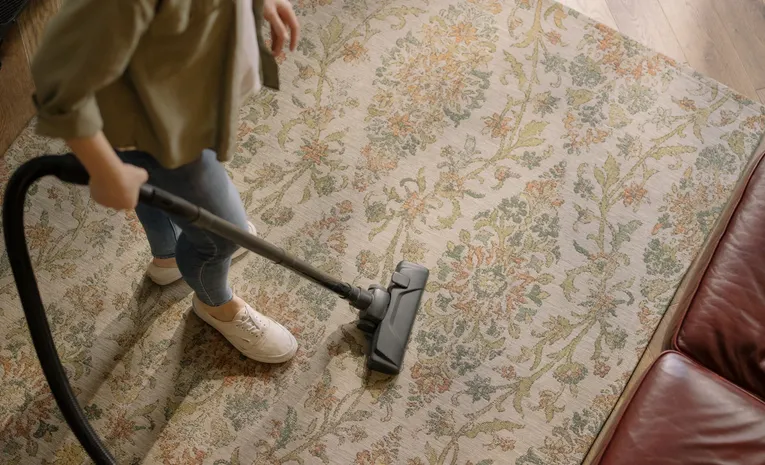
Vacuum the whole area first to remove loose dirt and dust, since cleaning over debris just grinds it further into the fibres. Mix a small amount of dish soap into warm water, or use a diluted white vinegar solution, and apply it to a cloth or soft brush rather than pouring it directly onto the carpet. Work the solution into the pile using gentle, circular motions, focusing on one manageable section at a time. Blot each treated section with a clean, dry cloth to lift the loosened dirt, then go over it again with a cloth dampened in plain water to rinse away any soap residue. Finish by blotting dry and allowing the carpet to air fully before walking on it again.
How to Clean Carpet With Baking Soda
Basic Baking Soda Method
Sprinkle baking soda evenly across the carpet and leave it to sit for at least 15 to 20 minutes, or overnight for a deeper treatment. It absorbs moisture, odours, and light surface dirt, and vacuums away cleanly afterward.
Baking Soda and Vinegar Combination
For a stronger treatment, sprinkle baking soda first, then lightly mist the area with a diluted white vinegar solution. It will fizz gently as the two react, which helps lift ingrained dirt. Leave to dry fully before vacuuming, since vacuuming while damp is far less effective.
How to Deep Clean Carpet at Home
A genuine deep clean goes further than a quick refresh, aiming to lift dirt that has settled deep into the pile over months of use. Whether you are working by hand or with a machine, the same principle applies: vacuum thoroughly first, work in manageable sections, use enough solution to actually reach the base of the fibres without oversaturating the carpet, and allow proper drying time afterward, since a carpet left damp for too long can develop a musty smell or even mould at the backing.
How to Clean a Really Dirty or Neglected Carpet
For carpet that has been neglected for a long time, patience matters more than any single product. Start with a thorough vacuum, ideally going over the same area from a few different directions to lift as much loose dirt as possible. Follow with the baking soda and vinegar treatment above, left to work for longer than usual, before moving to a full wash by hand or machine. Heavily soiled carpet often needs two full cleaning passes rather than one, with full drying time between each.
How to Remove Carpet Smells
Most everyday carpet odours respond well to a generous baking soda treatment left overnight before vacuuming, since baking soda absorbs odour rather than just masking it. For a stronger, more persistent smell, a light mist of diluted white vinegar applied before the baking soda step adds extra odour-neutralising power, though always test on a hidden area first.
Pet-Related Odours, Including Dog Urine
Dog urine needs a slightly different approach, since the smell comes from bacteria breaking down the uric acid in the stain, not just surface moisture. Blot up as much liquid as possible immediately, then apply an enzymatic pet stain cleaner rather than a general soap solution, since enzymatic cleaners are specifically formulated to break down the compounds standard cleaning products leave behind. Once the enzymatic treatment has worked and dried, a baking soda application helps address any lingering smell.
For other pet-related carpet issues, our guide to removing pet hair from carpet and furniture covers keeping fur under control alongside odour and stains.
How to Clean Carpet With a Machine
A carpet cleaning machine, whether owned or hired, uses a shampoo or hot water extraction method to push cleaning solution into the pile and pull it back out along with the dirt, giving a more thorough result across a larger area than hand cleaning alone. Fill the machine according to its instructions, work in slow, overlapping passes, and avoid overwetting the carpet, since machines can apply more moisture than they always fully extract.
Cleaning by Carpet Fibre Type
Wool carpet needs gentler treatment than synthetic fibres, since strong chemicals and excess heat can damage the natural fibre or cause shrinking. Synthetic carpets such as nylon or polyester generally tolerate the methods in this guide well, though testing on a hidden area first remains good practice regardless of fibre type.
What Is the Best Thing to Clean a Carpet With?
For most household carpet, a mild solution of dish soap and warm water, or diluted white vinegar, handles the majority of everyday dirt and marks effectively without needing a specialist product. Baking soda is the best option specifically for odour, while an enzymatic cleaner is the better choice for pet-related stains where bacteria are involved.
How Often Should You Deep Clean Carpet?
Most households benefit from a full deep clean every six to twelve months, with homes that have pets, young children, or heavy foot traffic often better suited to the more frequent end of that range. Regular vacuuming between deep cleans, ideally weekly in high-traffic areas, reduces how much work each deep clean actually needs.
Related Reading
If you are dealing with a specific stain rather than a general clean, our guide to removing a carpet stain covers wine, coffee, blood, grease, and more by type. Dripped candle wax needs its own approach, covered in our guide to removing candle wax. And if you are choosing new carpet for a high-traffic area such as a staircase, our guide to the best carpet for stairs covers durability and material choices.
Frequently Asked Questions
What is the best homemade solution for cleaning carpet?
A mix of white vinegar and water, or a small amount of mild dish soap in warm water, handles most everyday dirt and marks effectively without needing a shop-bought product.
How often should carpet be deep cleaned?
Every six to twelve months for most households, though homes with pets, children, or heavy foot traffic may benefit from more frequent deep cleaning.
Can I clean carpet without a vacuum?
A vacuum is strongly recommended before wet cleaning, since it removes loose dirt that would otherwise turn to mud once wet. Without one, gently sweeping or brushing the surface first is a reasonable substitute, though less thorough.
Can baking soda damage carpet?
Baking soda is generally safe on most carpet types when fully vacuumed away afterward. Leaving it embedded in the pile for an extended period without vacuuming is the main way it can become difficult to remove.
Does vinegar remove carpet smells?
Yes, diluted white vinegar helps neutralise many everyday odours, and combining it with a baking soda treatment gives a more thorough result for persistent smells.
Always test any cleaning solution on a small, hidden area of carpet first, and check manufacturer guidance for carpets under warranty before applying home remedies.
About the Author
Spire Homes Editorial Team researches and writes practical, UK focused home improvement guides covering renovation planning, financing, interior design, and property maintenance. Our content is reviewed for accuracy and updated as guidance changes.