Bathroom mould is one of the most common problems in UK homes, thanks to steam, splashes, and rooms that do not always get enough airflow. The good news is that most bathroom mould can be removed safely with household products, provided you deal with the moisture behind it as well as the mould itself.
How Do You Remove Mould from Bathroom Walls?
To remove mould from bathroom walls, ventilate the room, apply a diluted bleach or white vinegar solution to the affected area, leave it to work for ten to fifteen minutes, then scrub and rinse thoroughly. For mould that has spread across a large area, a fungicidal wash carrying a Health and Safety Executive approved number is a safer and more effective option than household bleach alone.
Why Mould Grows in Bathrooms
Mould needs moisture, warmth, and a food source, all of which bathrooms provide in abundance. Steam from showers and baths, condensation on cold surfaces, and poor ventilation combine to create ideal growing conditions. It typically appears as black, green, grey, or brown patches, often clustered in corners, around window frames, in grout lines, and near the ceiling where warm, damp air collects.
How to Remove Mould, Step by Step
1. Ventilate Before You Start
Open a window and switch on the extractor fan before you begin. Disturbing mould can release spores into the air, so good airflow reduces what you breathe in while cleaning.
2. Choose Your Cleaning Solution
For small patches, a diluted bleach solution or undiluted white vinegar sprayed directly onto the area works well. A mix of two tablespoons of borax, a quarter cup of white vinegar, and two cups of hot water is a milder alternative that still cuts through most bathroom mould.
3. Apply and Let It Work
Spray the solution over the affected area and leave it to sit for ten to fifteen minutes. This gives the solution time to break down the mould rather than just spreading it around the surface.
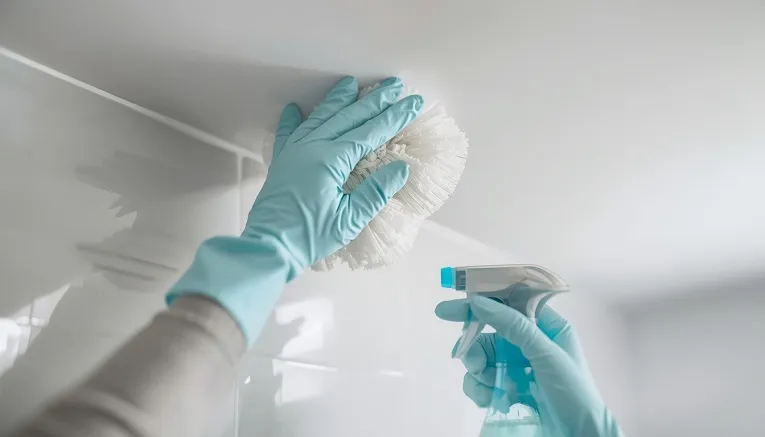
4. Scrub and Rinse
Use a scrubbing brush or old toothbrush for grout lines and corners, then rinse the area with clean water and dry it thoroughly with a cloth or towel.
5. Use a Fungicidal Wash for Larger Areas
Where mould covers a large section of wall or ceiling, everyday cleaning products are often not strong enough. A fungicidal wash carrying a Health and Safety Executive approved number is designed for this and should be used according to the manufacturer’s instructions.
Ceiling Mould: What Changes
Ceiling mould follows the same removal steps as wall mould, though working overhead calls for a few extra precautions. Use a step stool rather than overreaching, protect the floor and bath beneath with old towels, and expect ceiling mould to reappear faster if the room has a weak or noisy extractor fan, since warm, damp air rises and collects there first.
How to Prevent Mould Coming Back
- Run the extractor fan: keep it running during showers and for at least twenty minutes afterwards to clear humid air.
- Wipe down wet surfaces: a quick wipe of walls and shower screens after use removes the moisture mould feeds on.
- Fix leaks promptly: dripping taps or leaking pipework keep surfaces damp even when the room looks dry.
- Reduce condensation: keep the bathroom door open after use where possible, and consider a dehumidifier in bathrooms with little natural ventilation.
- Reseal grout and silicone: ageing sealant traps moisture behind it, so refreshing it periodically helps prevent mould taking hold underneath.
If ventilation is a persistent issue in your bathroom, our small bathroom ideas on a budget covers low-cost lighting and layout changes, and pairing them with better airflow can help keep mould from returning. Fixing dripping taps promptly also helps, since ongoing leaks keep surfaces damp even when the room looks dry; see our guide to fixing a dripping tap.
About the Author
Spire Homes Editorial Team researches and writes practical, UK focused home improvement guides covering renovation planning, financing, interior design, and property maintenance. Our content is reviewed for accuracy and updated as guidance changes.
When to Get Professional Help
If mould keeps returning despite regular cleaning, covers a large area, or you notice a persistent musty smell without visible staining, it may point to a hidden leak or a more serious damp problem. In these cases, a qualified damp specialist or your landlord, if you are renting, should be involved, since treating the surface mould without fixing the underlying moisture source rarely solves the problem long term.
Frequently Asked Questions
What kills mould permanently on bathroom walls?
No treatment permanently prevents mould spores from being present, since they exist naturally in the air. Controlling moisture through ventilation, prompt leak repairs, and regular cleaning is the most effective way to stop mould returning after treatment.
Is bleach or vinegar better for removing bathroom mould?
Both work for small patches. Bleach acts faster but can be harsher on coloured grout and fabrics, while vinegar is milder and safer for regular use but takes longer to work.
Can I paint over mould in a bathroom?
No. Painting over mould without removing it and addressing the moisture source usually allows the mould to grow back through the new paint within weeks or months.
Is bathroom mould dangerous to my health?
Some people, particularly those with allergies, asthma, or respiratory conditions, can experience irritation from mould exposure. If mould is extensive, ventilate the area well while cleaning and consider wearing a mask and gloves.
How often should I clean my bathroom to prevent mould?
A weekly wipe-down of tiles, grout, and shower screens, combined with running the extractor fan during and after use, is usually enough to keep most bathrooms mould-free.
If you are a tenant, persistent damp or mould that does not respond to cleaning should be reported to your landlord, since it may indicate a structural or ventilation issue beyond routine cleaning.